10 Common Mistakes Physiotherapists Make During Patient Assessment (And How to Avoid Them)
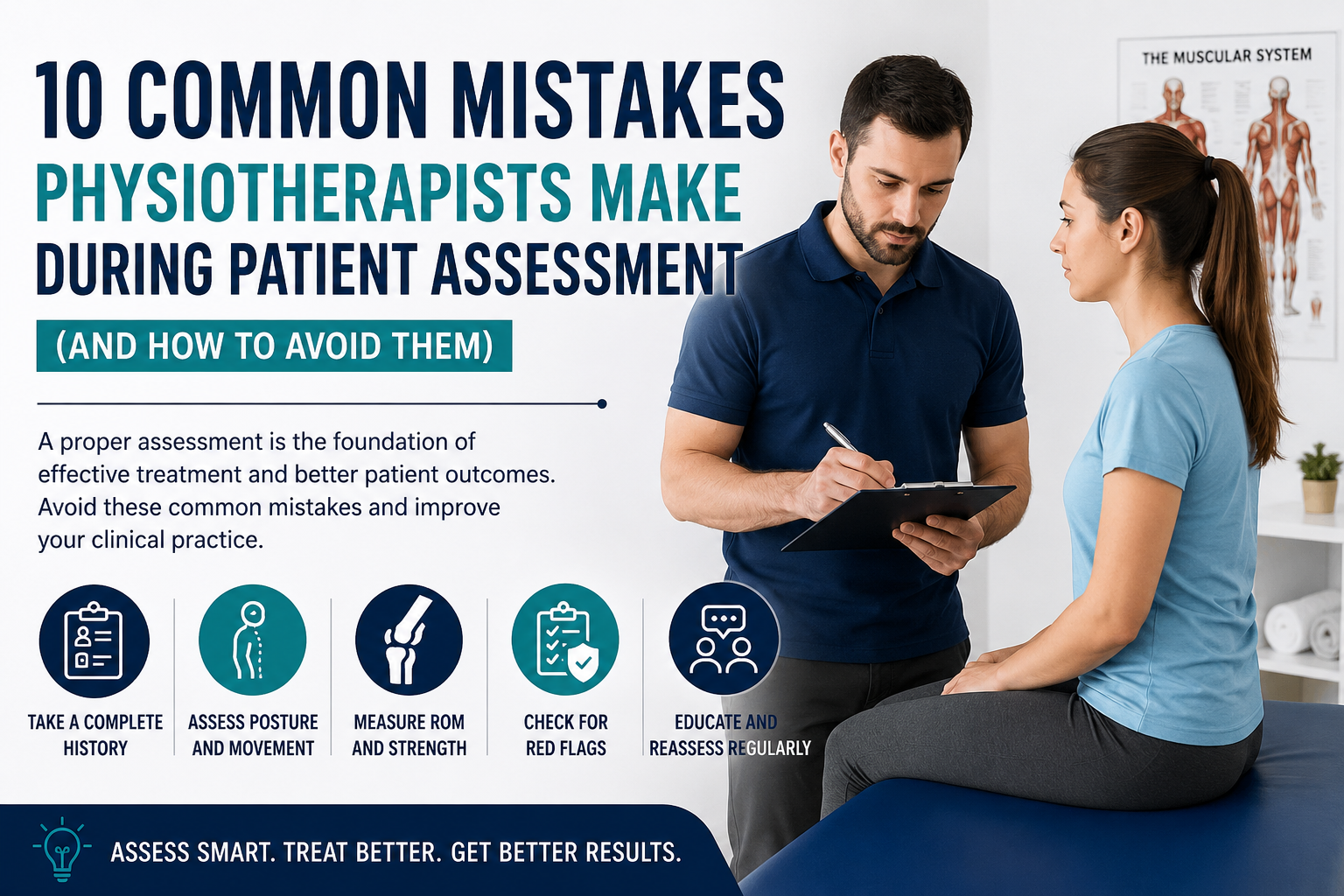
10 Common Mistakes Physiotherapists Make During Patient Assessment (And How to Avoid Them)
Why a Proper Assessment is the Foundation of Successful Physiotherapy Treatment
A successful physiotherapy treatment doesn't begin with exercises—it begins with a thorough patient assessment. An accurate assessment helps identify the root cause of pain, establish realistic treatment goals, and create an effective rehabilitation plan.
However, even experienced physiotherapists can unintentionally make mistakes during the assessment process that may affect patient outcomes.
In this article, we'll discuss the ten most common assessment mistakes and practical ways to avoid them.
1. Rushing Through Patient History
One of the biggest mistakes is focusing only on the patient's current complaint without exploring the complete medical history.
Always ask about:
- Previous injuries
- Surgeries
- Medical conditions
- Occupation
- Sports activities
- Lifestyle habits
- Pain duration
- Aggravating and relieving factors
A detailed history often provides more valuable information than the physical examination itself.
2. Ignoring Functional Limitations
Many therapists focus solely on pain intensity.
Instead, evaluate how pain affects the patient's daily life.
Ask questions like:
- Can you climb stairs?
- Can you sit for long periods?
- Can you lift objects?
- Can you sleep comfortably?
Functional assessment helps measure real-life improvement.
3. Skipping Postural Assessment
Poor posture contributes to many musculoskeletal conditions.
Observe the patient in:
- Standing
- Sitting
- Walking
- Functional movements
Simple postural observations often reveal hidden biomechanical problems.
4. Not Measuring Range of Motion (ROM)
Always document:
- Active ROM
- Passive ROM
- Pain during movement
- End feel
Objective measurements allow you to compare progress during follow-up visits.
5. Forgetting Strength Testing
Manual muscle testing helps identify weaknesses that may contribute to pain or dysfunction.
Assess:
- Muscle strength
- Endurance
- Symmetry
- Functional performance
Never rely only on patient feedback.
6. Missing Red Flags
Always screen for conditions requiring immediate medical referral.
Watch for:
- Sudden unexplained weight loss
- Night pain
- Fever
- Loss of bowel or bladder control
- Progressive neurological symptoms
- History of cancer
Recognizing red flags protects both the patient and the therapist.
7. Poor Documentation
Incomplete documentation makes future treatment planning difficult.
Record:
- Subjective findings
- Objective findings
- Clinical impression
- Treatment goals
- Home exercise program
- Follow-up plan
Good documentation improves continuity of care.
8. Not Educating the Patient
Patients recover better when they understand:
- Their diagnosis
- Expected recovery timeline
- Home exercises
- Activity modifications
- Prevention strategies
Patient education increases treatment compliance.
9. Setting Unrealistic Expectations
Avoid promising immediate recovery.
Instead:
- Explain expected progress
- Discuss possible setbacks
- Set measurable short-term goals
- Celebrate small improvements
Clear communication builds trust.
10. Failing to Reassess
Assessment should not happen only during the first visit.
Reassess regularly:
- Pain levels
- Range of motion
- Muscle strength
- Functional ability
- Patient goals
Continuous reassessment ensures the treatment plan remains effective.
Assessment Checklist for Every Physiotherapist
Before ending the assessment, confirm you have completed:
- ✅ Detailed patient history
- ✅ Pain assessment
- ✅ Functional assessment
- ✅ Postural analysis
- ✅ Range of motion
- ✅ Strength testing
- ✅ Special tests (if indicated)
- ✅ Red flag screening
- ✅ Patient education
- ✅ Treatment planning
Final Thoughts
A thorough assessment is one of the most valuable clinical skills a physiotherapist can develop. It improves diagnostic accuracy, guides treatment decisions, and helps patients achieve better outcomes.
As your clinic grows, maintaining structured digital assessment records can also improve consistency, save time, and make follow-up consultations more effective.
By combining strong clinical reasoning with organized documentation, physiotherapists can deliver higher-quality care and build lasting patient trust.
Back to blog