Assessment of Low Back Pain: A Complete Guide for Physiotherapists
Introduction
Low back pain (LBP) is one of the most common musculoskeletal conditions encountered by physiotherapists worldwide. According to research, nearly 80% of adults experience low back pain at some point in their lives. While many cases are mechanical in nature, some may indicate serious underlying pathology.
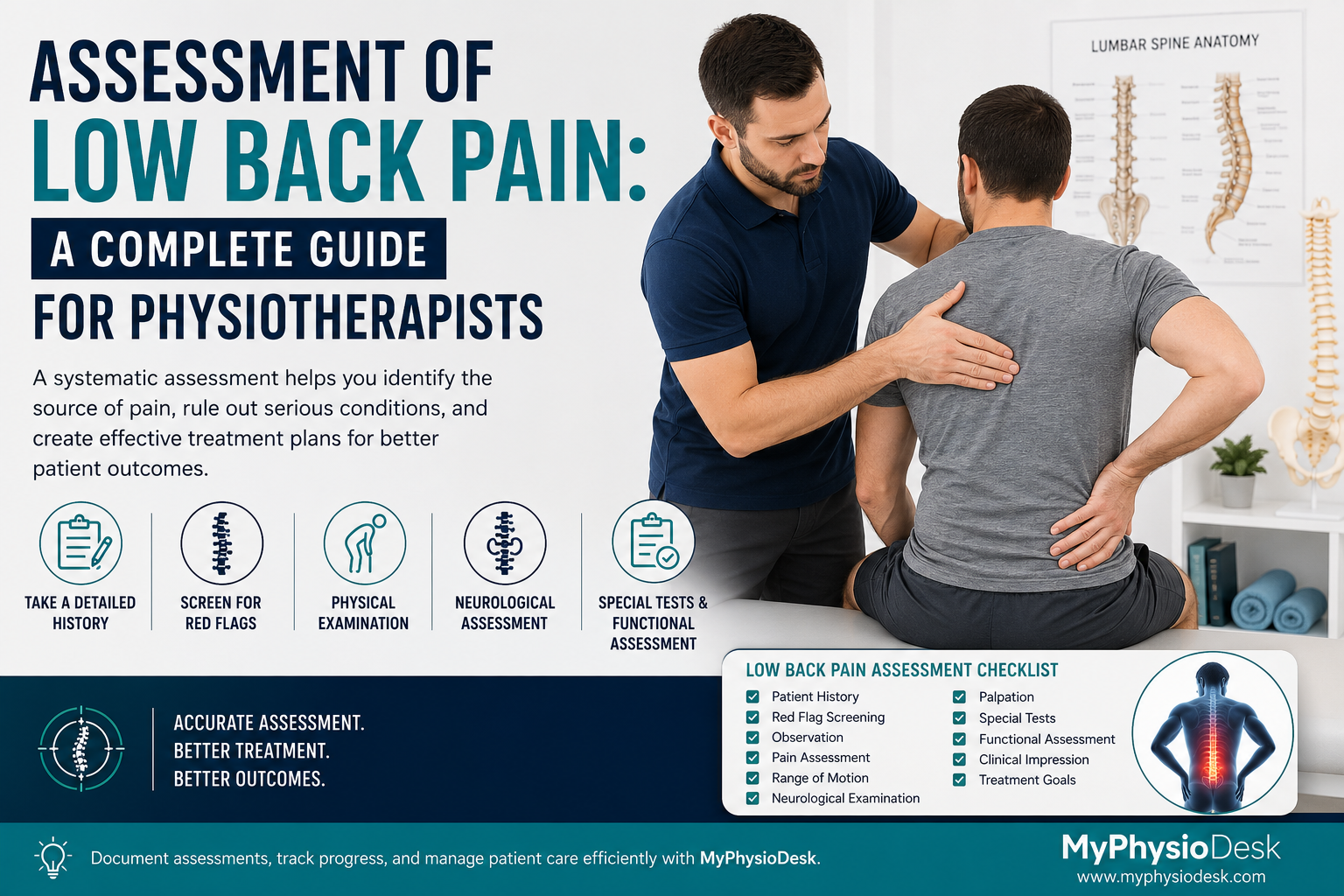
A systematic assessment helps physiotherapists identify the source of pain, recognize red flags, establish an accurate diagnosis, and develop an effective treatment plan.
This guide explains a step-by-step approach to assessing patients with low back pain.
Step 1: Patient History
A detailed subjective assessment is the most important part of the examination. Many diagnoses can be suspected before the physical examination begins.
Always ask about:
- Chief complaint
- Pain location
- Pain intensity (VAS/NPRS)
- Duration of symptoms
- Mode of onset
- History of trauma
- Previous episodes
- Occupation
- Lifestyle and activity level
- Sleep disturbances
- Aggravating factors
- Relieving factors
- Previous treatments
Step 2: Screen for Red Flags
Every physiotherapist should rule out serious pathology before beginning treatment.
Watch for the following red flags:
- Recent major trauma
- Unexplained weight loss
- Night pain
- Fever or infection
- History of cancer
- Loss of bowel or bladder control
- Saddle anesthesia
- Progressive neurological weakness
- Long-term steroid use
If any red flags are present, immediate medical referral is recommended.
Step 3: Observation
Observe the patient before touching them.
- Standing posture
- Lumbar lordosis
- Pelvic alignment
- Walking pattern
- Protective posture
- Muscle wasting
- Visible deformities
Step 4: Pain Assessment
Use standardized pain scales.
- Visual Analog Scale (VAS)
- Numeric Pain Rating Scale (NPRS)
- Pain behavior
- Pain pattern
- Morning stiffness
Step 5: Range of Motion Assessment
Evaluate active lumbar movements.
- Flexion
- Extension
- Right Side Flexion
- Left Side Flexion
- Right Rotation
- Left Rotation
Document pain, movement quality, and movement restriction.
Step 6: Neurological Examination
Assess neurological involvement carefully.
- Dermatomes
- Myotomes
- Deep tendon reflexes
- Sensation
- Motor weakness
Step 7: Palpation
Palpate for:
- Muscle tenderness
- Paraspinal muscle spasm
- Spinous process tenderness
- Sacroiliac joint tenderness
- Trigger points
Step 8: Special Tests
Perform special tests when clinically indicated.
- Straight Leg Raise (SLR)
- Crossed Straight Leg Raise
- Slump Test
- Femoral Nerve Stretch Test
- FABER Test
- Prone Instability Test
Step 9: Functional Assessment
Evaluate how low back pain affects daily life.
- Sitting tolerance
- Standing tolerance
- Walking distance
- Bending
- Lifting
- Stair climbing
- Sleep quality
- Work activities
Step 10: Clinical Impression
Combine subjective and objective findings to establish a working clinical diagnosis.
Examples include:
- Mechanical Low Back Pain
- Lumbar Disc Herniation
- Lumbar Radiculopathy
- Facet Joint Dysfunction
- Sacroiliac Joint Dysfunction
- Lumbar Muscle Strain
Create an Individualized Treatment Plan
Based on the assessment findings, establish measurable treatment goals and create an individualized rehabilitation program that may include manual therapy, therapeutic exercises, posture correction, patient education, and home exercise prescription.
Low Back Pain Assessment Checklist
- ✅ Complete Patient History
- ✅ Red Flag Screening
- ✅ Observation
- ✅ Pain Assessment
- ✅ Lumbar ROM
- ✅ Neurological Examination
- ✅ Palpation
- ✅ Special Tests
- ✅ Functional Assessment
- ✅ Clinical Diagnosis
- ✅ Treatment Goals
Final Thoughts
A structured low back pain assessment enables physiotherapists to identify the underlying cause of symptoms, recognize serious conditions early, and develop evidence-based treatment plans. Consistent assessment techniques improve clinical reasoning, treatment outcomes, and patient confidence.
To simplify documentation and maintain consistency across every patient visit, MyPhysioDesk provides built-in Digital Assessment Forms, SOAP Notes, and secure Patient Records. These features help physiotherapists document assessments professionally, monitor patient progress over time, and spend more time focusing on patient care instead of paperwork.
Start your 14-Day FREE Trial today.
🌐 https://app.myphysiodesk.com
Back to blog