Pediatric Physiotherapy Assessment: Key Principles Every Physiotherapist Should Know
Key Takeaways
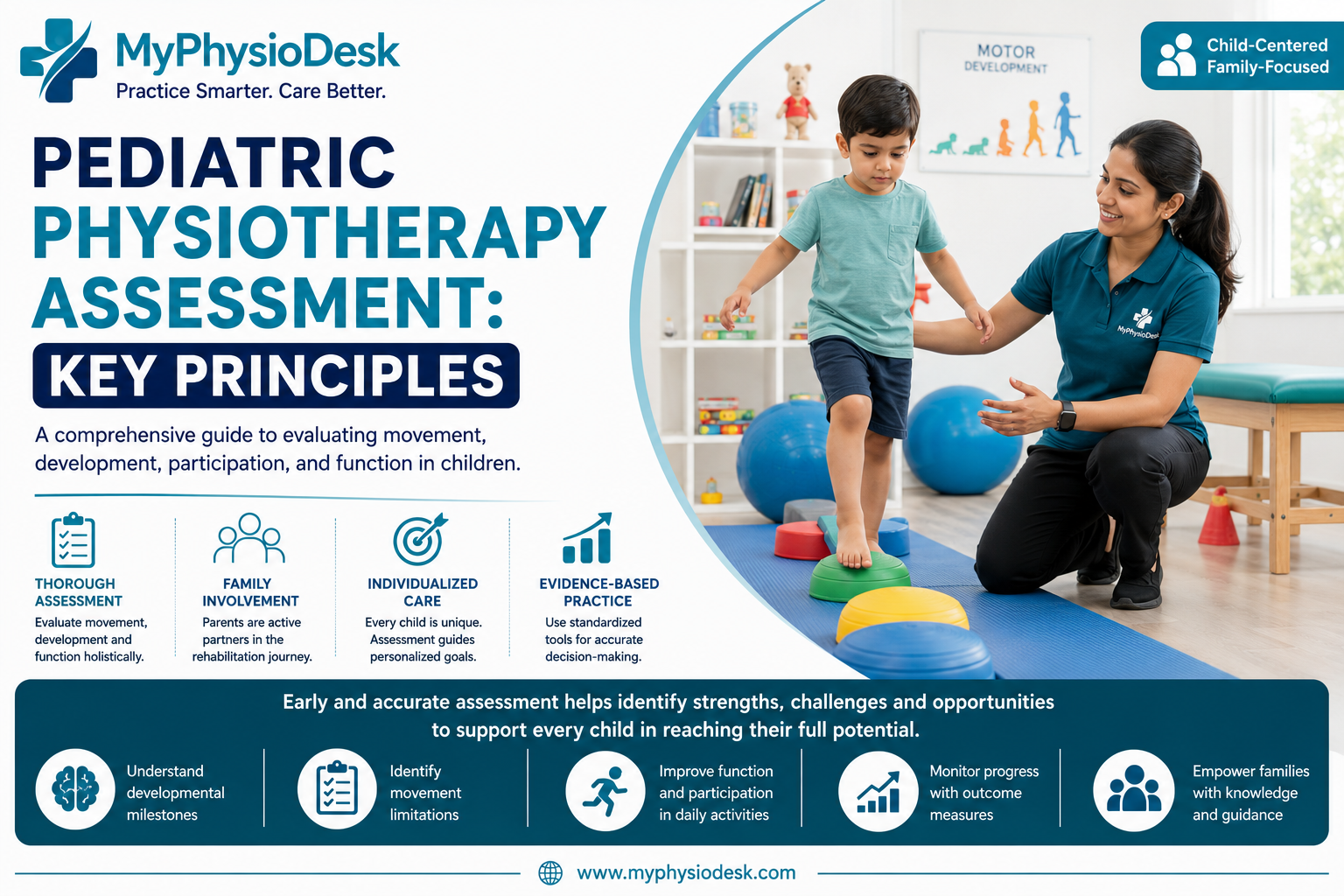
- Pediatric assessment evaluates development, movement, participation, and functional independence.
- Play-based observation provides valuable information that cannot always be obtained through formal examination.
- Parents are essential partners in assessment and rehabilitation planning.
- Developmental milestones should always be interpreted within the child's overall clinical picture.
- Standardized outcome measures improve treatment planning and progress monitoring.
- Early identification of developmental delays leads to better functional outcomes.
Table of Contents
- Introduction
- What is Pediatric Physiotherapy?
- Goals of Pediatric Assessment
- Child Development
- Developmental Milestones
- Family-Centered Care
- Subjective Assessment
- Objective Assessment
- Muscle Tone Assessment
- Primitive Reflex Assessment
- Strength & ROM Assessment
- Balance & Gait Assessment
- Outcome Measures
- Clinical Decision Making
- Parent Education
- Red Flags Requiring Referral
- Common Assessment Mistakes
- Pediatric Physiotherapy Assessment Checklist
- Frequently Asked Questions
- References
Introduction
Children are not simply "small adults." Their nervous system, musculoskeletal system, motor learning, cognition, communication, and emotional responses change rapidly throughout infancy and childhood. Because of this, pediatric physiotherapy assessment requires a completely different clinical approach compared with adult assessment.
Rather than focusing only on pain or joint movement, pediatric physiotherapists evaluate how children move, interact with their environment, achieve developmental milestones, participate in daily activities, and respond to therapeutic intervention.
An effective pediatric assessment identifies not only impairments but also strengths, environmental barriers, caregiver concerns, and opportunities to maximize functional independence.
What is Pediatric Physiotherapy?
Pediatric physiotherapy is a specialized branch of physiotherapy that focuses on evaluating, treating, and improving movement disorders in infants, children, and adolescents.
The primary objective is to help every child achieve maximum independence and participate confidently in family life, school, sports, and community activities regardless of physical limitations.
Children receiving pediatric physiotherapy may present with conditions such as:
- Cerebral Palsy
- Developmental Delay
- Down Syndrome
- Autism Spectrum Disorder
- Spina Bifida
- Muscular Dystrophy
- Brachial Plexus Injury
- Torticollis
- Clubfoot
- Genetic Disorders
- Neuromuscular Disorders
- Orthopedic Conditions
Always assess what the child can do, not only what the child cannot do. Identifying strengths builds confidence and helps design meaningful rehabilitation goals.
Goals of Pediatric Physiotherapy Assessment
The assessment process aims to understand the child holistically rather than simply assigning a diagnosis.
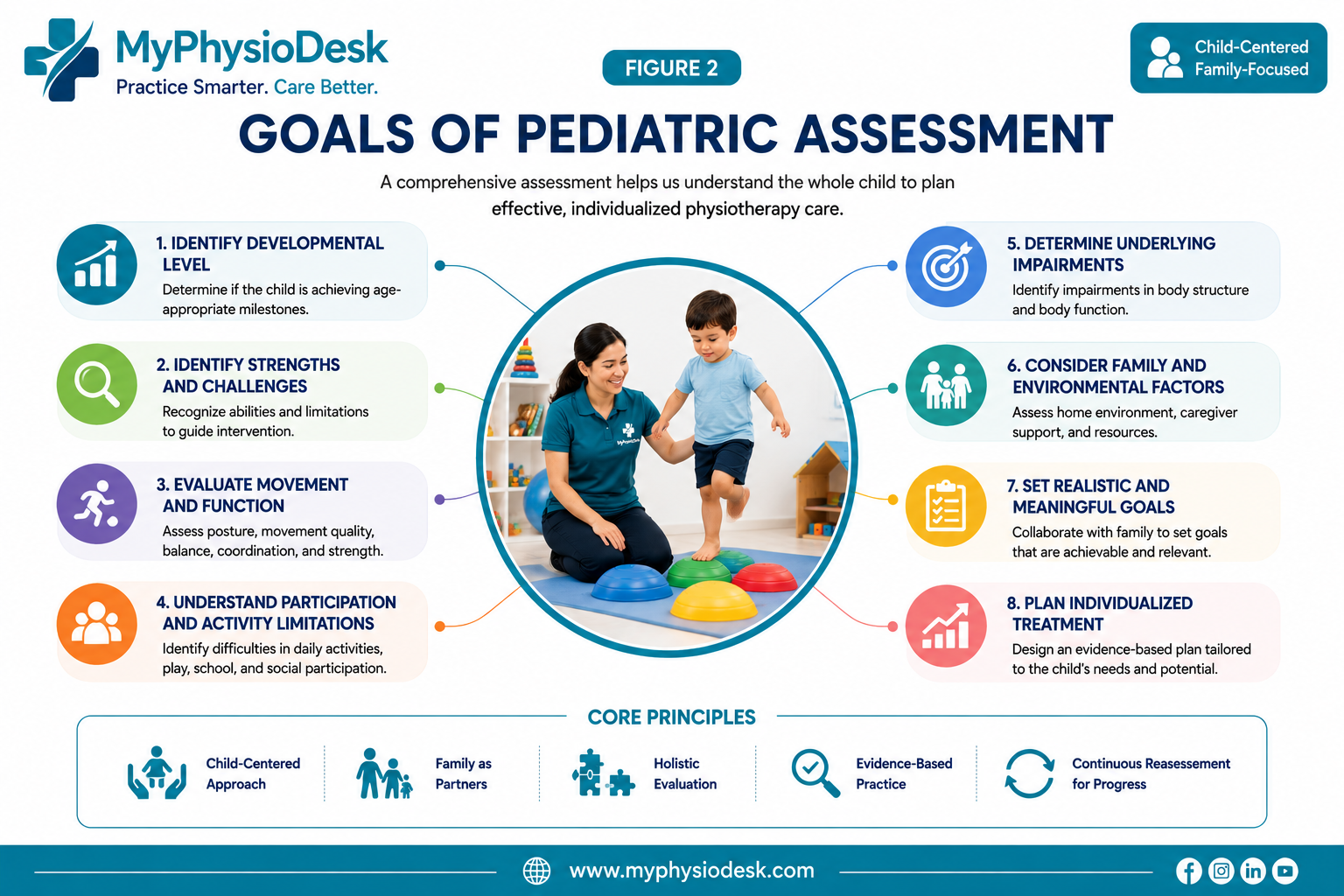
The assessment should answer several important clinical questions:
- Is development age-appropriate?
- Which developmental milestones are delayed?
- What activities can the child perform independently?
- Which impairments limit participation?
- How does the family support the child?
- Which interventions are most appropriate?
- What realistic goals should be established?
Understanding Child Development
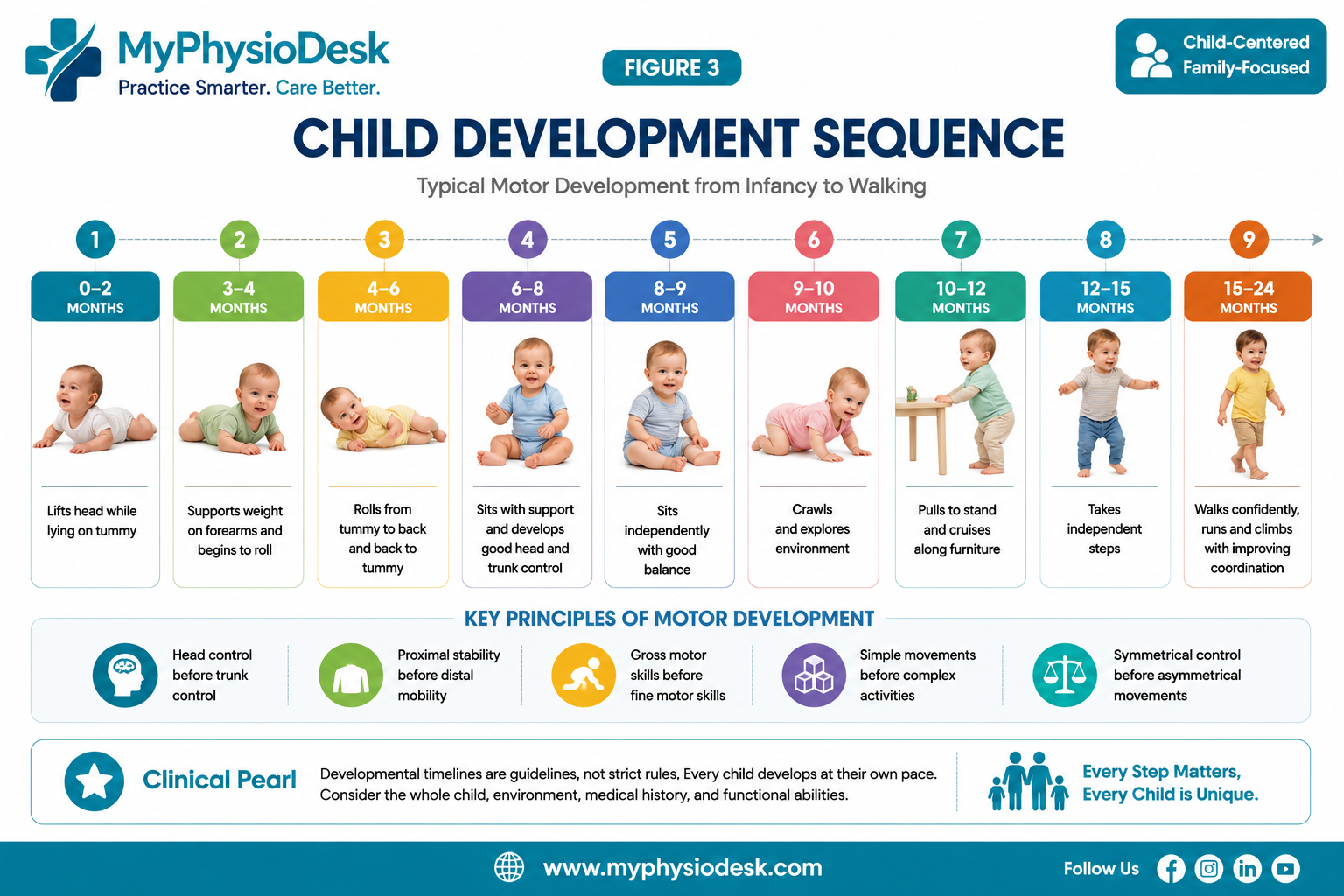
Normal motor development follows predictable patterns, although every child develops at a slightly different pace. Understanding developmental sequences allows physiotherapists to recognize delays and determine whether intervention is required.
Motor development generally progresses through the following principles:
- Head control before trunk control
- Proximal stability before distal mobility
- Gross motor skills before fine motor skills
- Simple movements before complex coordinated activities
- Symmetrical control before asymmetrical movement
Major Developmental Milestones
| Age | Expected Milestone |
|---|---|
| 2 Months | Lifts head while prone |
| 4 Months | Rolls from tummy to back |
| 6 Months | Sits with support |
| 8 Months | Sits independently |
| 9 Months | Crawling begins |
| 10 Months | Pulls to stand |
| 12 Months | Independent walking may begin |
| 18 Months | Runs and climbs stairs with assistance |
| 24 Months | Jumps and kicks a ball |
Do not diagnose developmental delay based on one milestone alone. Always consider the complete developmental profile, medical history, gestational age (for premature infants), and family observations.
Family-Centered Care
Parents and caregivers are essential members of the rehabilitation team. They observe the child's daily performance, understand behavioral patterns, and play a crucial role in implementing home exercise programs.
Successful pediatric physiotherapy therefore emphasizes collaboration rather than simply providing treatment during clinic visits.
During assessment, ask parents about:
- Main concerns
- Pregnancy and birth history
- Feeding difficulties
- Sleeping habits
- Play activities
- School participation
- Mobility at home
- Previous therapy
- Family goals

Preparing for the Assessment
A child-friendly environment greatly improves cooperation and assessment accuracy. Bright colors, toys, age-appropriate equipment, and a calm atmosphere help children feel safe and encourage natural movement.
The physiotherapist should:
- Build rapport before examination.
- Allow time for play.
- Observe spontaneous movement.
- Avoid rushing the child.
- Adapt communication according to age.
- Respect the child's comfort level.
Young children rarely perform their best when asked to "exercise." Instead, integrate assessment into games and play activities to observe authentic movement patterns.
Subjective Assessment
A comprehensive history guides the objective examination and helps identify factors contributing to movement difficulties.
Important information includes:
- Chief complaint
- Birth history
- Developmental history
- Medical diagnosis
- Medications
- Previous surgeries
- Previous therapy
- Current mobility
- School performance
- Home environment
- Family expectations
Clinical Case Example
Case Study
A 16-month-old child is referred for delayed walking. The parents report that the child crawls efficiently and pulls to stand but is reluctant to walk independently. Pregnancy and birth history are unremarkable. Observation reveals mild lower-limb hypotonia with adequate trunk control and normal social interaction.
Clinical Question: Which additional assessments would you perform before designing the treatment plan?
Objective Assessment in Pediatric Physiotherapy
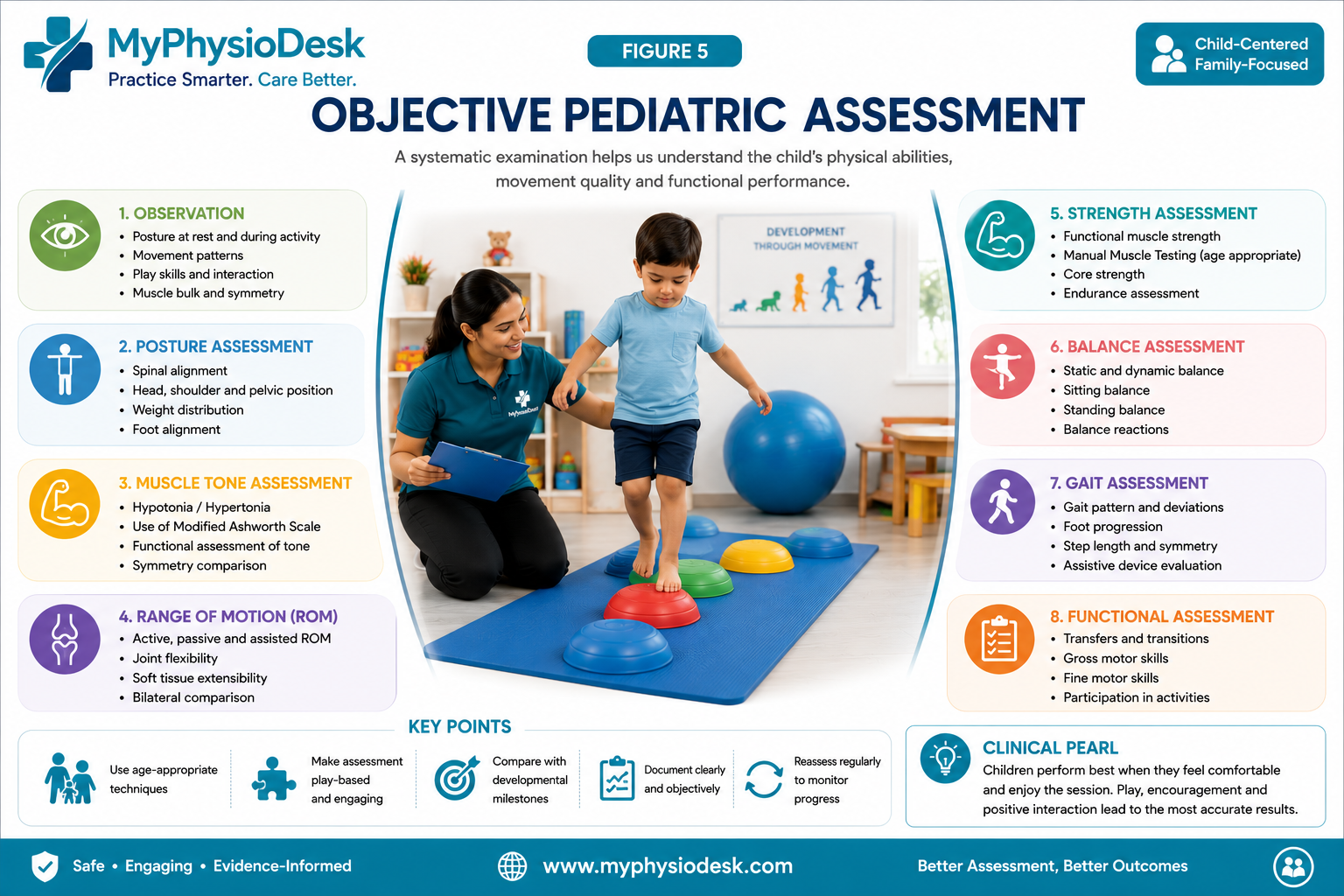
Following a detailed history, the objective assessment provides measurable information about the child's physical abilities, developmental status, movement quality, and functional limitations. Unlike adult assessment, pediatric evaluation should be integrated into play whenever possible to encourage natural movement and reduce anxiety.
Observation Assessment
Observation begins the moment the child enters the clinic. Valuable information can be obtained before any formal examination is performed.
Observe the following:
- Posture
- Spontaneous movements
- Symmetry
- Eye contact
- Play behavior
- Social interaction
- Movement confidence
- Balance while standing
- Walking pattern
- Transitions between positions
Children often demonstrate their true movement abilities during spontaneous play rather than during formal testing.
Postural Assessment
Postural alignment influences balance, movement efficiency, and long-term musculoskeletal development. Assessment should be performed in sitting, standing, crawling, kneeling, and walking positions whenever appropriate.
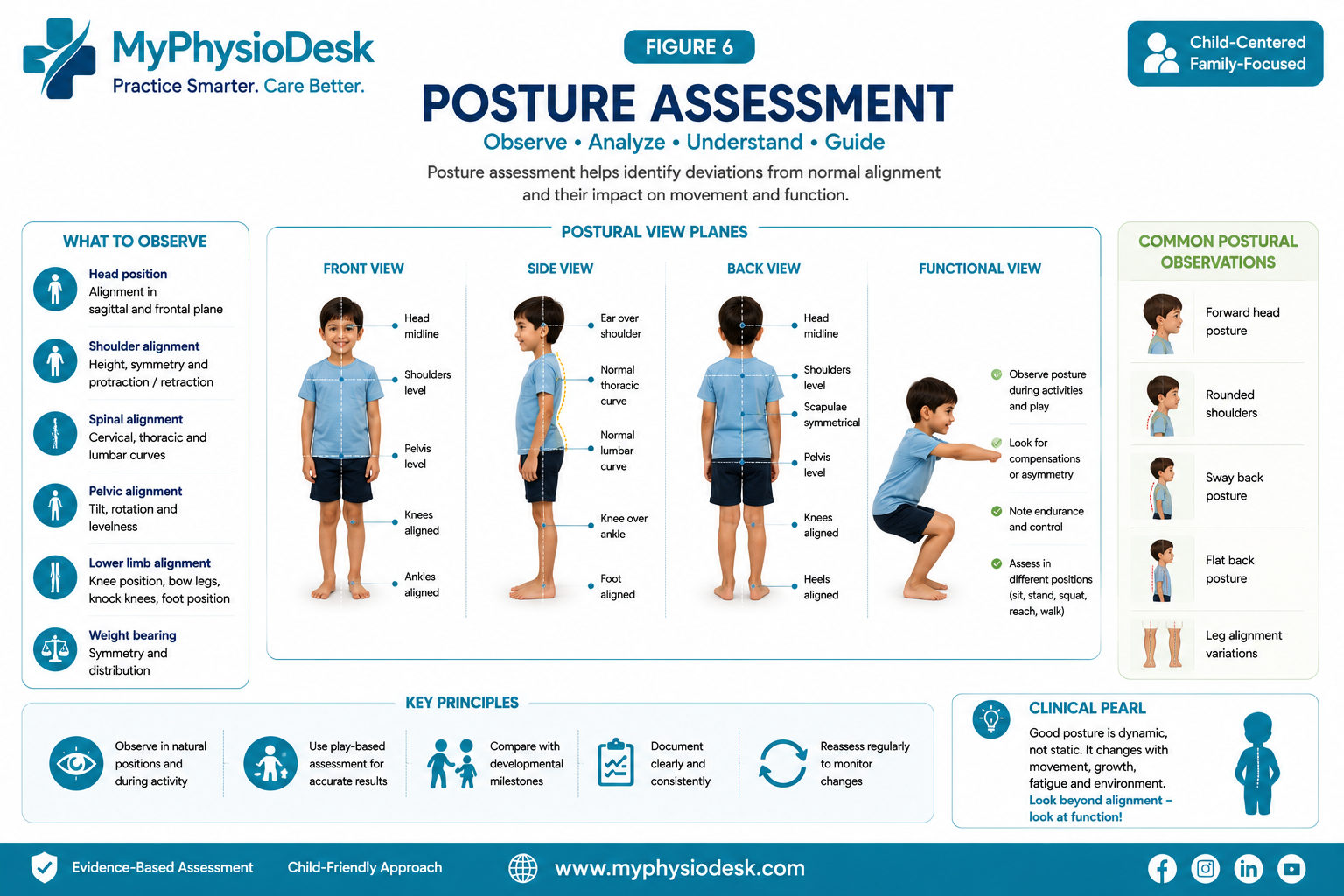
Assess:
- Head alignment
- Shoulder symmetry
- Spinal posture
- Pelvic alignment
- Hip position
- Knee alignment
- Foot posture
- Weight distribution
Developmental Position Assessment
Evaluate the child's movement in each developmental position rather than assessing only standing or walking.
| Position | Clinical Observation |
|---|---|
| Supine | Midline control, spontaneous movement, symmetry |
| Prone | Head lifting, weight bearing through arms |
| Rolling | Segmental control and coordination |
| Sitting | Trunk stability and balance |
| Quadruped | Weight shifting and crawling |
| Kneeling | Hip stability and balance |
| Standing | Postural control and alignment |
| Walking | Functional mobility |
Muscle Tone Assessment
Muscle tone assessment is essential in children with neurological disorders such as cerebral palsy, brain injury, and genetic syndromes.
Assess for:
- Hypotonia
- Hypertonia
- Spasticity
- Rigidity
- Fluctuating tone
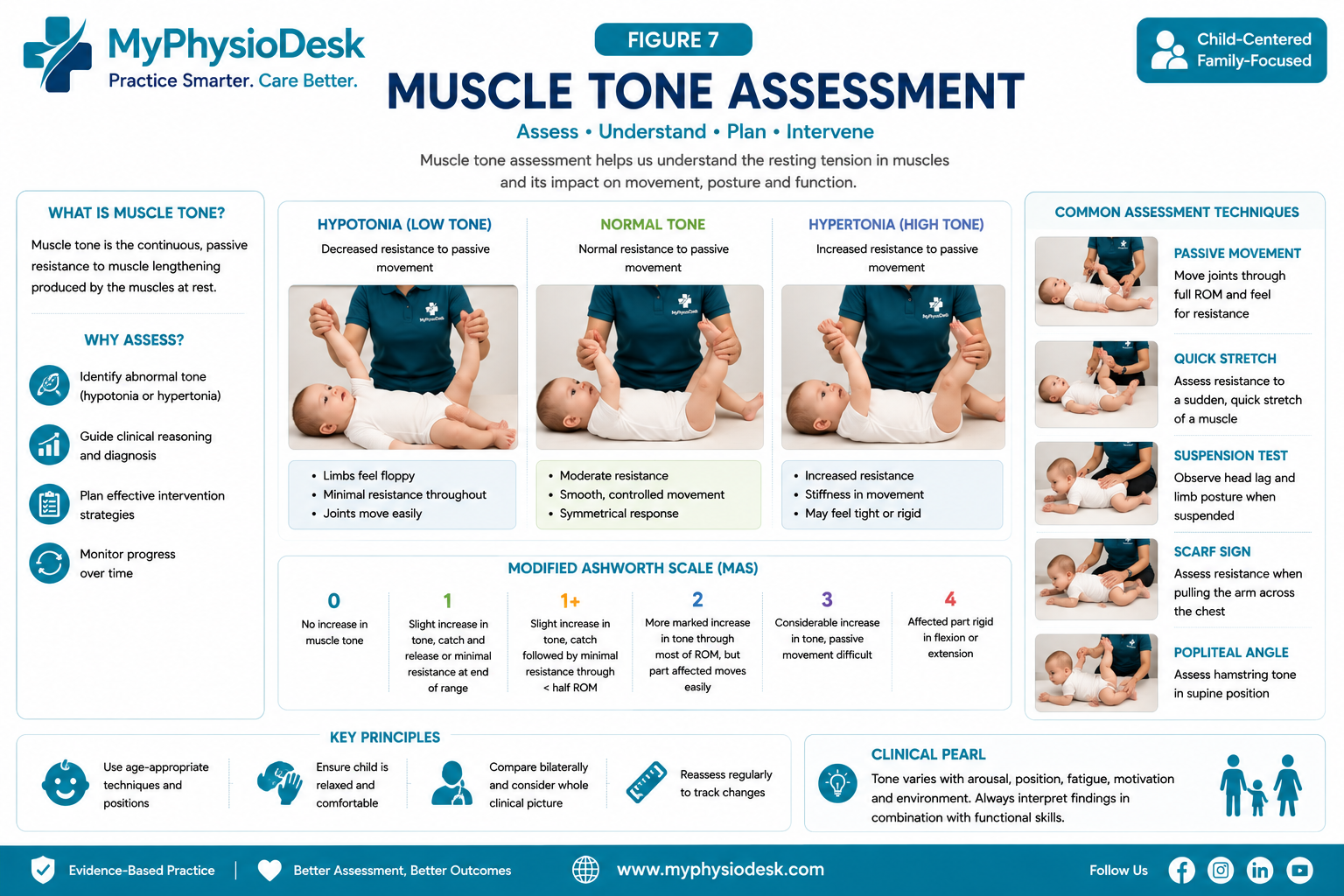
Standardized tools such as the Modified Ashworth Scale or Modified Tardieu Scale may be used when appropriate.
Primitive Reflex Assessment
Primitive reflexes are normal during infancy but should gradually integrate as the nervous system matures. Persistent primitive reflexes beyond the expected age may indicate neurological dysfunction.
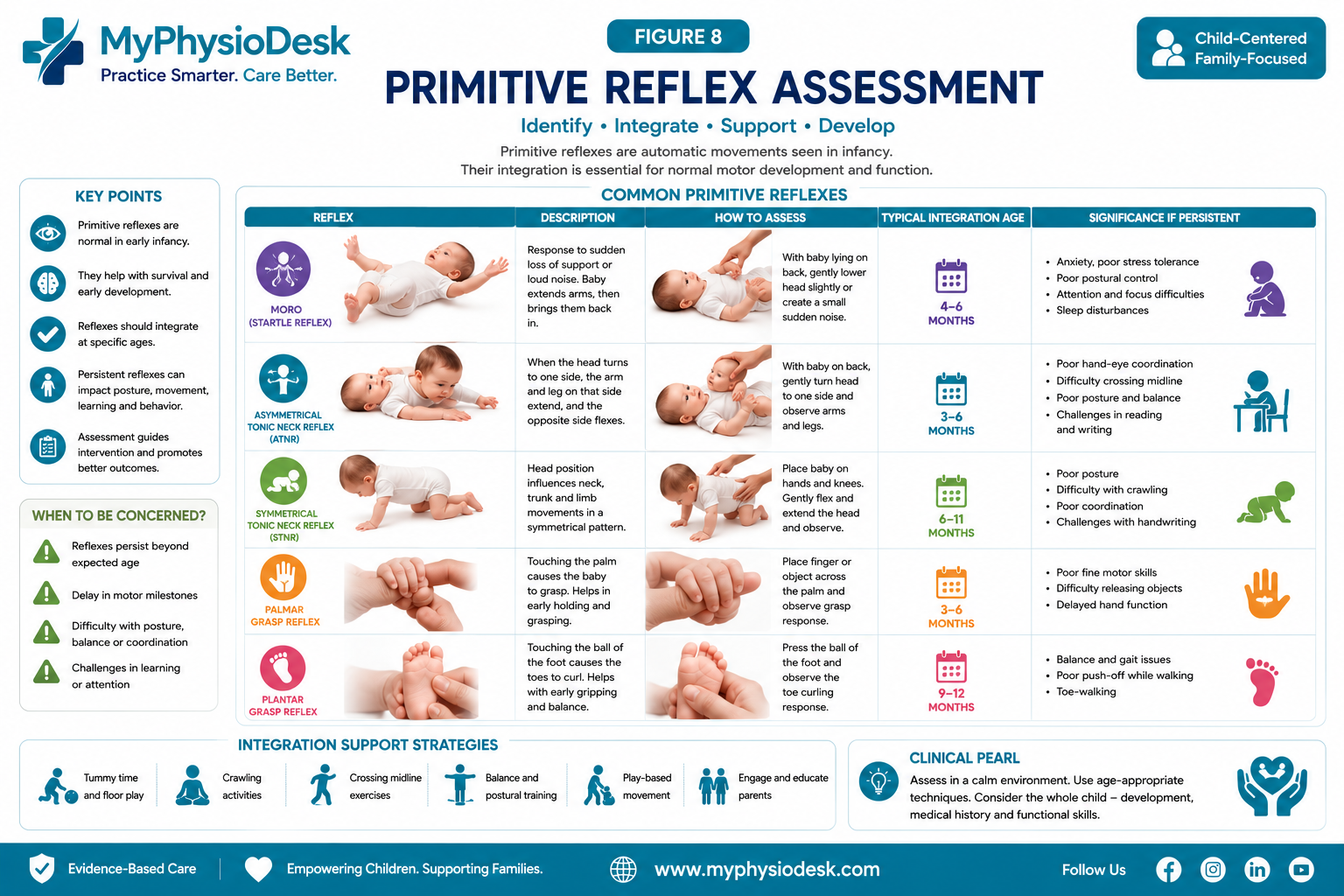
| Reflex | Normally Integrated |
|---|---|
| Moro Reflex | 4–6 Months |
| Rooting Reflex | 4 Months |
| Palmar Grasp | 5–6 Months |
| Plantar Grasp | 9–12 Months |
| ATNR | 5–6 Months |
| STNR | 9–11 Months |
| TLR | 6 Months |
Persistent primitive reflexes may interfere with sitting, crawling, walking, handwriting, balance, and coordination.
Range of Motion Assessment
Passive and active range of motion should be evaluated carefully to identify joint restrictions, muscle tightness, and contractures.
Assess:
- Neck
- Shoulders
- Elbows
- Wrists
- Hips
- Knees
- Ankles
- Spine
Muscle Strength Assessment
Formal manual muscle testing may not be feasible in younger children. Functional observation often provides more reliable information.
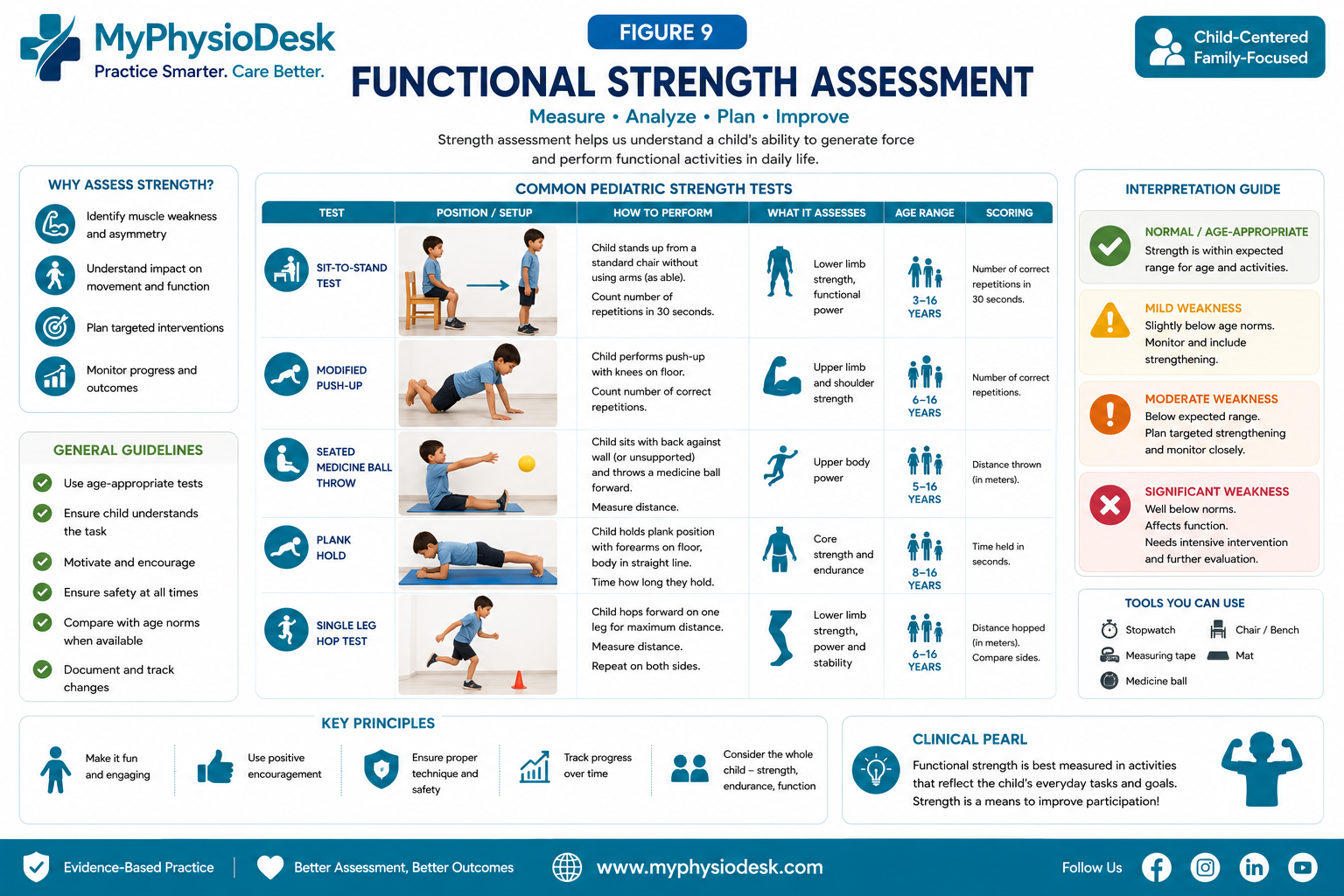
Observe the child's ability to:
- Stand from the floor
- Climb stairs
- Jump
- Squat
- Run
- Kick a ball
- Push or pull toys
Balance Assessment
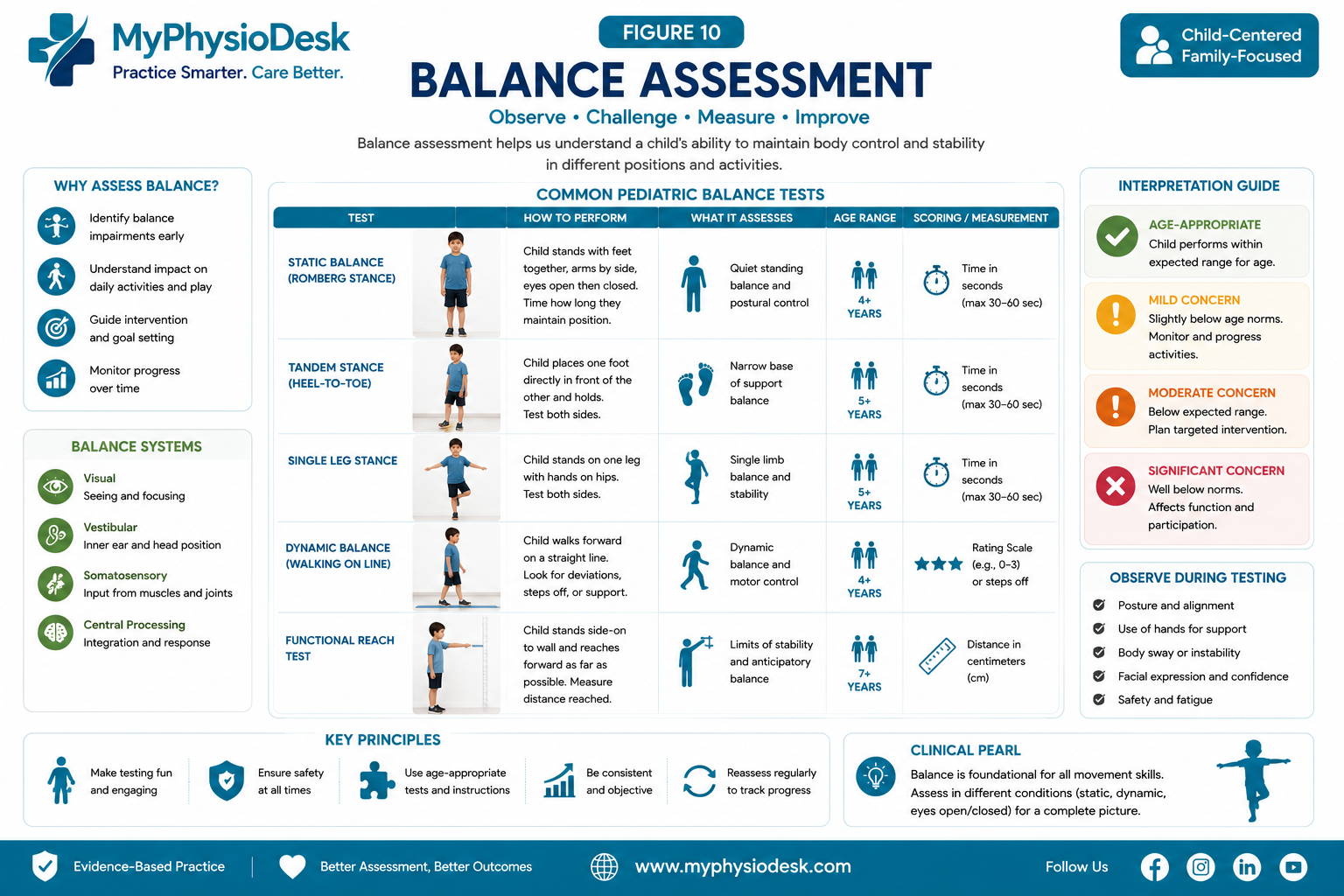
Balance develops progressively throughout childhood. Assessment should be appropriate for the child's developmental age.
Useful balance activities include:
- Sitting balance
- Standing balance
- Single-leg stance
- Tandem walking
- Walking on a line
- Balance beam
- Reaching activities
Gait Assessment
Walking analysis provides valuable information regarding neuromuscular control, coordination, symmetry, endurance, and movement efficiency.
Observe:
- Step length
- Cadence
- Foot placement
- Heel strike
- Toe clearance
- Arm swing
- Pelvic motion
- Balance
- Running pattern
Standardized Outcome Measures
Whenever possible, objective outcome measures should be incorporated into pediatric assessment to improve clinical decision-making and monitor progress over time.
| Assessment Tool | Primary Purpose |
|---|---|
| GMFM-66 | Gross motor function in Cerebral Palsy |
| PEDI-CAT | Daily activities and participation |
| Peabody Developmental Motor Scales (PDMS-2) | Motor development assessment |
| Bruininks-Oseretsky Test (BOT-2) | Motor proficiency |
| Berg Balance Scale (Pediatric Adaptations) | Balance assessment |
Clinical Case Discussion
A 4-year-old child with spastic diplegic cerebral palsy presents with toe walking, increased lower-limb tone, decreased balance, and difficulty climbing stairs.
Clinical Question: Which outcome measures would provide the most meaningful baseline before beginning physiotherapy?
Clinical Decision-Making in Pediatric Physiotherapy
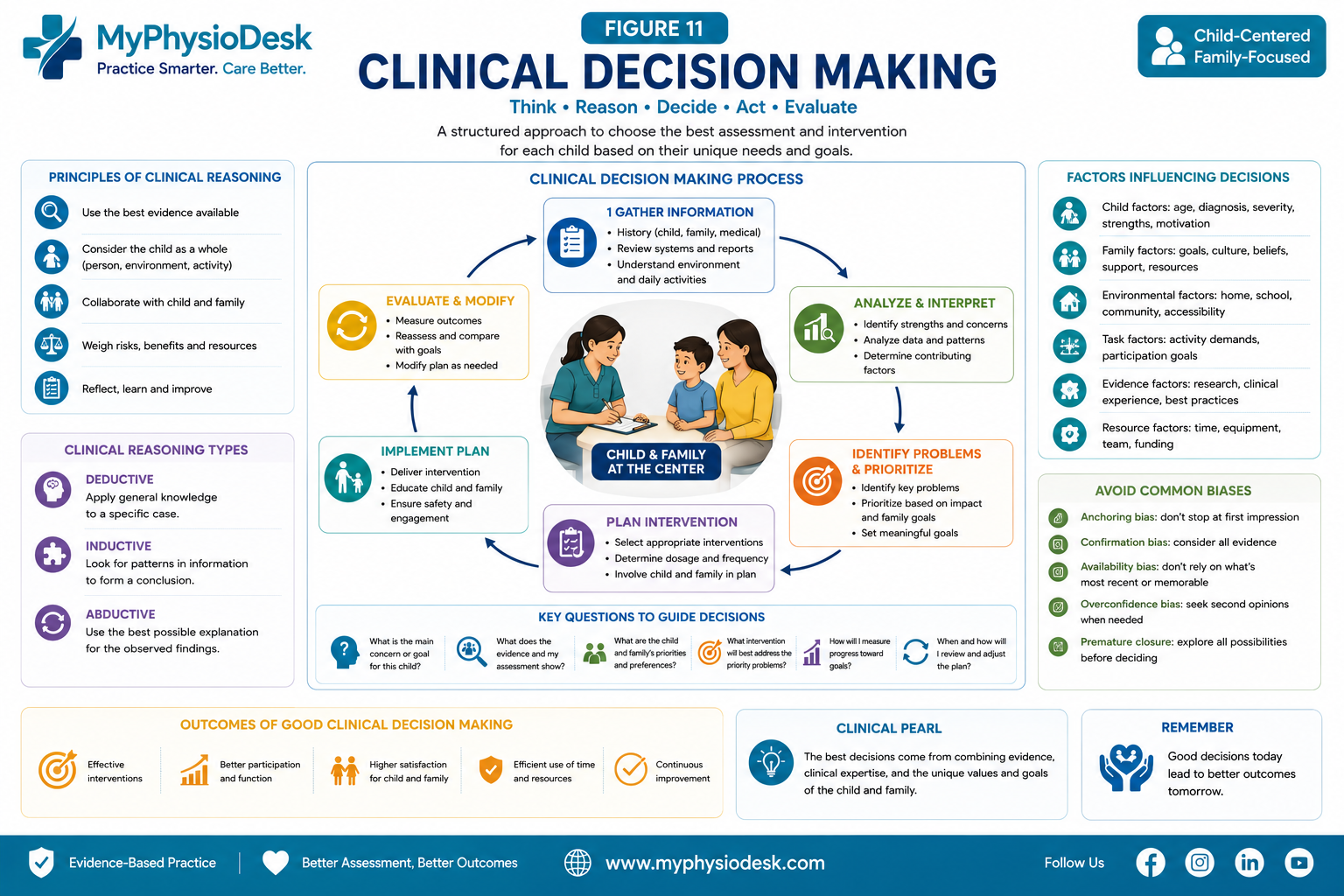
Collecting assessment findings is only the first step. The true value of pediatric physiotherapy lies in interpreting those findings and developing an individualized treatment plan. Every child presents with unique strengths, challenges, family expectations, and environmental factors that influence rehabilitation.
Clinical decision-making should integrate:
- Medical diagnosis
- Developmental age
- Chronological age
- Motor abilities
- Participation restrictions
- Family priorities
- School requirements
- Home environment
- Child's interests and motivation
Setting SMART Goals
Treatment goals should be meaningful, measurable, and relevant to the child's daily life. Using SMART goals helps therapists monitor progress objectively.
| SMART Component | Example |
|---|---|
| Specific | Walk independently for 10 meters. |
| Measurable | Maintain single-leg standing for 10 seconds. |
| Achievable | Based on current developmental level. |
| Relevant | Supports participation at school. |
| Time-bound | Within 8 weeks. |
Parent Education
Parents spend significantly more time with the child than the therapist. Therefore, educating caregivers is one of the most important components of successful pediatric rehabilitation.
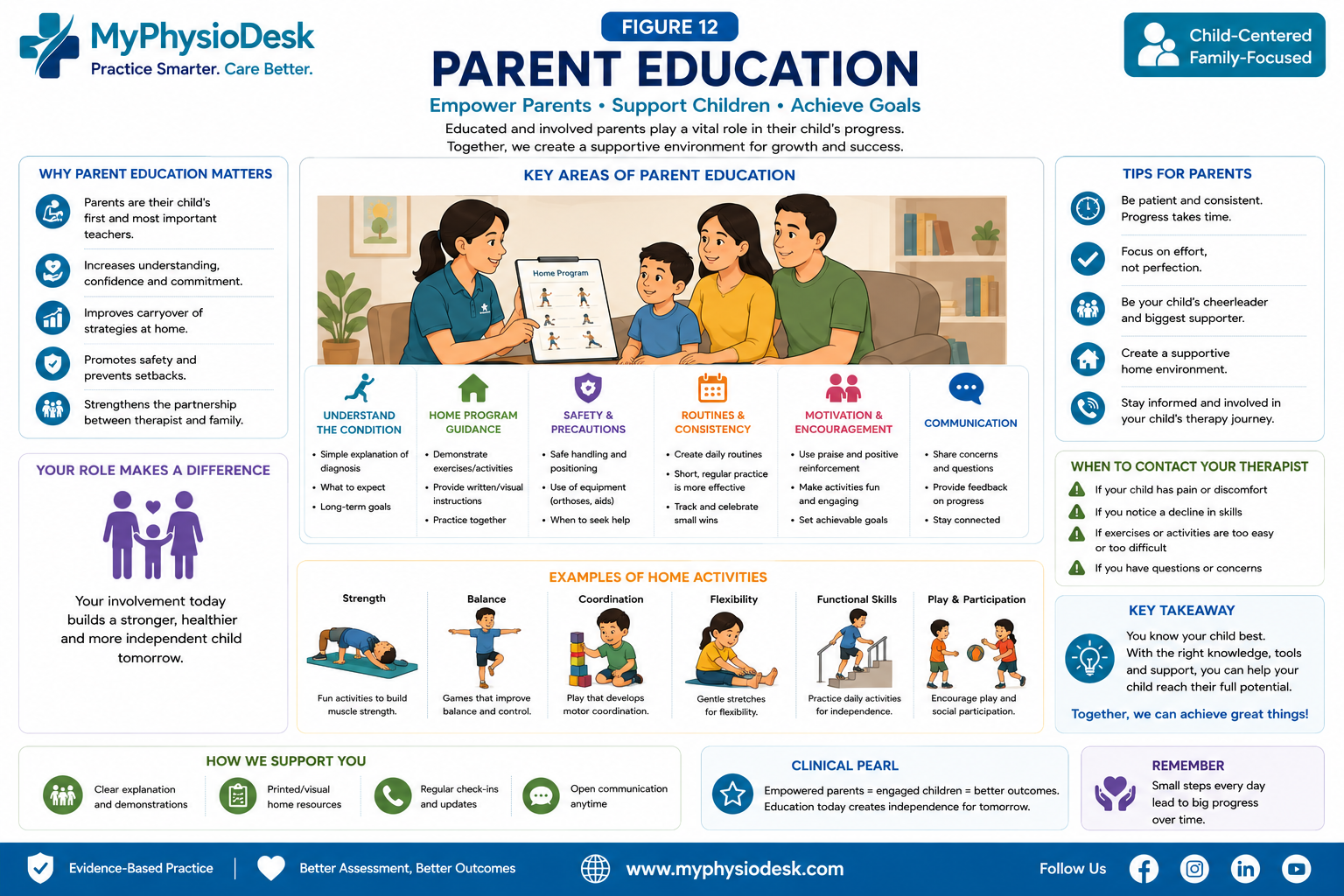
Parents should understand:
- The child's diagnosis.
- Expected developmental progress.
- Importance of home exercises.
- Safe handling techniques.
- Play-based therapy activities.
- Positioning advice.
- Use of assistive devices (if required).
- Signs that require medical review.
Home exercise programs should be enjoyable and integrated into the child's daily routine. Children are more likely to participate when therapy is presented as play rather than a formal exercise session.
Documentation Best Practices
Accurate documentation ensures continuity of care, supports clinical decision-making, and provides a record of progress over time.
Each assessment should include:
- Subjective findings
- Objective findings
- Developmental milestones
- Outcome measure scores
- Clinical impression
- Treatment goals
- Home exercise program
- Follow-up recommendations
Red Flags Requiring Referral
Certain findings may indicate underlying medical conditions that require referral to a pediatrician or specialist.
- Loss of previously acquired developmental milestones.
- Persistent asymmetrical movements.
- Progressive muscle weakness.
- Seizures or unexplained episodes of unconsciousness.
- Severe hypotonia or hypertonia.
- Persistent primitive reflexes far beyond expected age.
- Significant feeding or swallowing difficulties.
- Rapid regression in motor function.
Common Assessment Mistakes
- Assessing only impairments instead of function.
- Ignoring parent concerns.
- Skipping developmental milestone evaluation.
- Using adult assessment methods for young children.
- Not observing spontaneous play.
- Failing to reassess progress regularly.
- Poor documentation.
- Setting unrealistic treatment goals.
The most accurate assessment often occurs while a child is playing naturally. Formal testing should support—not replace—functional observation.
Pediatric Physiotherapy Assessment Checklist
- ✅ Parent Interview
- ✅ Birth History
- ✅ Developmental History
- ✅ Developmental Milestones
- ✅ Observation
- ✅ Posture Assessment
- ✅ Muscle Tone Assessment
- ✅ Primitive Reflex Testing
- ✅ Range of Motion
- ✅ Strength Assessment
- ✅ Balance Assessment
- ✅ Gait Assessment
- ✅ Functional Assessment
- ✅ Outcome Measures
- ✅ Goal Setting
- ✅ Parent Education
- ✅ Documentation
Frequently Asked Questions (FAQ)
When should a child be referred for pediatric physiotherapy?
Referral is appropriate when developmental milestones are delayed, movement abnormalities are observed, balance problems exist, or a medical condition affects mobility and function.
How long does a pediatric assessment take?
A comprehensive initial assessment usually takes between 45 and 90 minutes, depending on the child's age, diagnosis, and cooperation.
Why is play important during assessment?
Play allows therapists to observe natural movement, coordination, balance, problem-solving, and social interaction without placing unnecessary stress on the child.
Should parents remain present during assessment?
Yes. Parents provide valuable information regarding the child's development and often help the child feel comfortable during the assessment.
How often should reassessment be performed?
Reassessment intervals depend on the diagnosis and treatment goals, but regular objective review is essential to monitor progress and modify interventions.
Evidence-Informed Clinical Practice
Current pediatric physiotherapy emphasizes family-centered care, functional goal setting, standardized outcome measures, and play-based intervention. Clinical decisions should combine research evidence, therapist expertise, and family priorities to achieve meaningful improvements in activity and participation.
Related Articles
- Stroke Rehabilitation: Initial Physiotherapy Assessment
- Outcome Measures Used in Neurological Physiotherapy
- Balance Assessment Techniques for Neurological Patients
- Assessment of Low Back Pain: A Complete Guide for Physiotherapists
Manage Pediatric Assessments Efficiently with MyPhysioDesk
Comprehensive pediatric assessments involve large amounts of clinical information. MyPhysioDesk helps physiotherapists organize every assessment with digital documentation tools designed for modern clinical practice.
- ✔ Digital Assessment Forms
- ✔ Structured SOAP Notes
- ✔ Developmental Progress Tracking
- ✔ Personalized Exercise Plans
- ✔ Clinical Attachments
- ✔ Patient Timeline
- ✔ Appointment Management
- ✔ Secure Cloud-Based Patient Records
Whether you're treating developmental delays, neurological disorders, orthopedic conditions, or pediatric sports injuries, MyPhysioDesk helps you document assessments, monitor progress, and deliver consistent, high-quality care.
Start your 14-Day FREE Trial today.
🌐 https://myphysiodesk.com
Suggested References
- American Physical Therapy Association (APTA). Pediatric Physical Therapy Clinical Practice Resources.
- World Health Organization (WHO). International Classification of Functioning, Disability and Health – Children & Youth Version (ICF-CY).
- Novak I, et al. Early, Accurate Diagnosis and Early Intervention in Cerebral Palsy.
- Palisano RJ, et al. Gross Motor Function Classification System (GMFCS).
- Russell DJ, et al. Gross Motor Function Measure (GMFM) User Manual.
- Peabody Developmental Motor Scales (PDMS-2) Manual.
- Bruininks-Oseretsky Test of Motor Proficiency (BOT-2) Manual.
Final Thoughts
A thorough pediatric physiotherapy assessment is the foundation of effective rehabilitation. By combining careful observation, developmental milestone evaluation, standardized outcome measures, family-centered care, and evidence-informed clinical reasoning, physiotherapists can create individualized treatment plans that support each child's functional independence and long-term participation in everyday life.
Back to blog