Hamstring Injury Rehabilitation for Athletes: A Complete Practical Guide for Physiotherapists
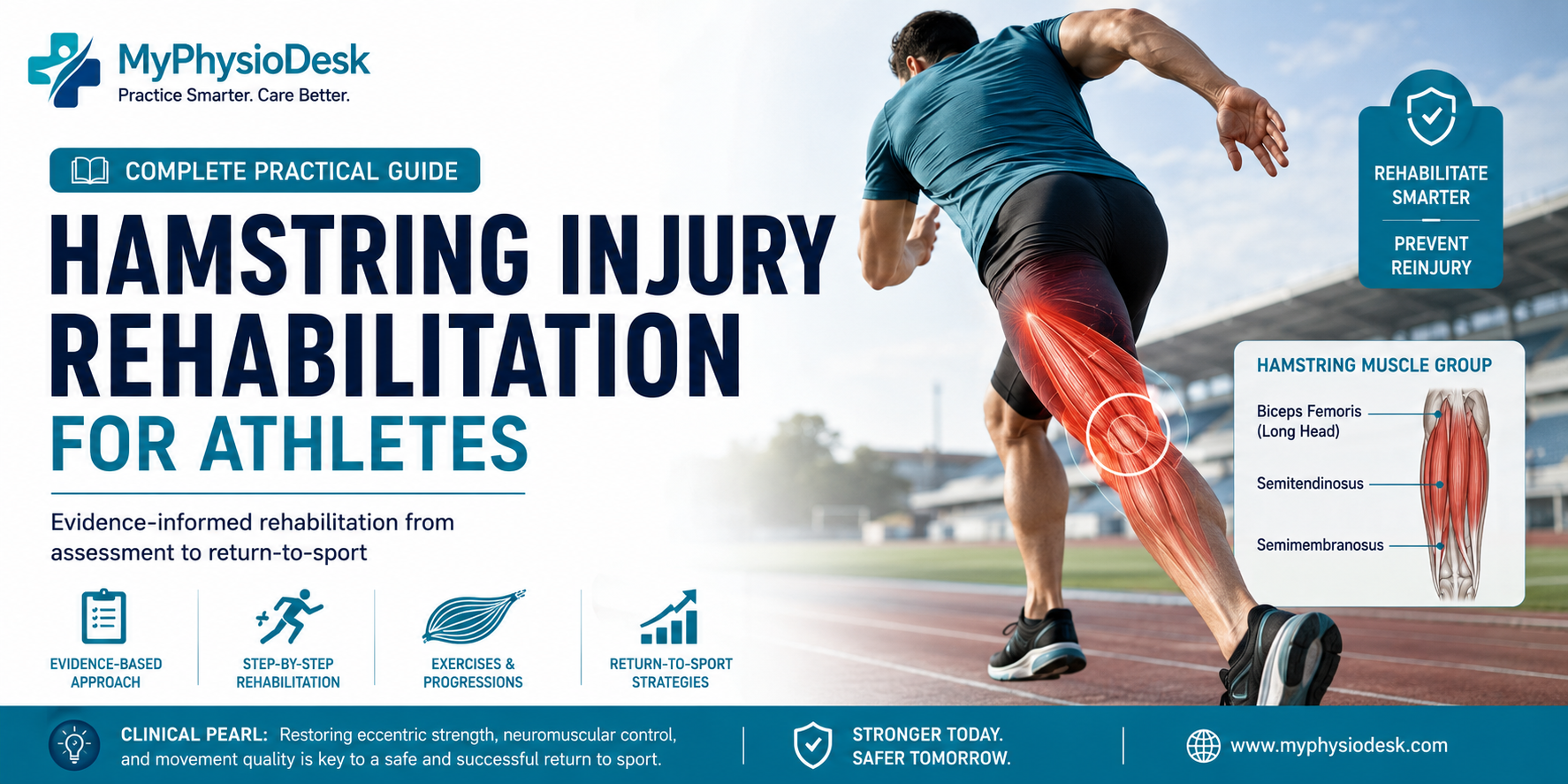
Hamstring injuries are among the most common muscle injuries in sports, accounting for a significant percentage of time lost from athletic participation. They frequently affect athletes involved in football, cricket, badminton, athletics, rugby, hockey, basketball, tennis, and other sports requiring sprinting, sudden acceleration, jumping, and rapid changes of direction.
Despite being extremely common, hamstring injuries also have one of the highest recurrence rates. Studies have shown that many reinjuries occur within the first few weeks after returning to sport, often because rehabilitation was incomplete or progression was too aggressive.
Successful rehabilitation requires much more than pain reduction. Physiotherapists must restore muscle strength, flexibility, neuromuscular control, running mechanics, and athlete confidence before allowing a safe return to competition.
In this comprehensive guide, we'll explore the complete rehabilitation process, from initial assessment to return-to-sport testing, using practical clinical reasoning and evidence-informed rehabilitation principles.
Hamstring Muscle Anatomy
Understanding hamstring anatomy helps physiotherapists accurately assess injuries and prescribe appropriate rehabilitation exercises.
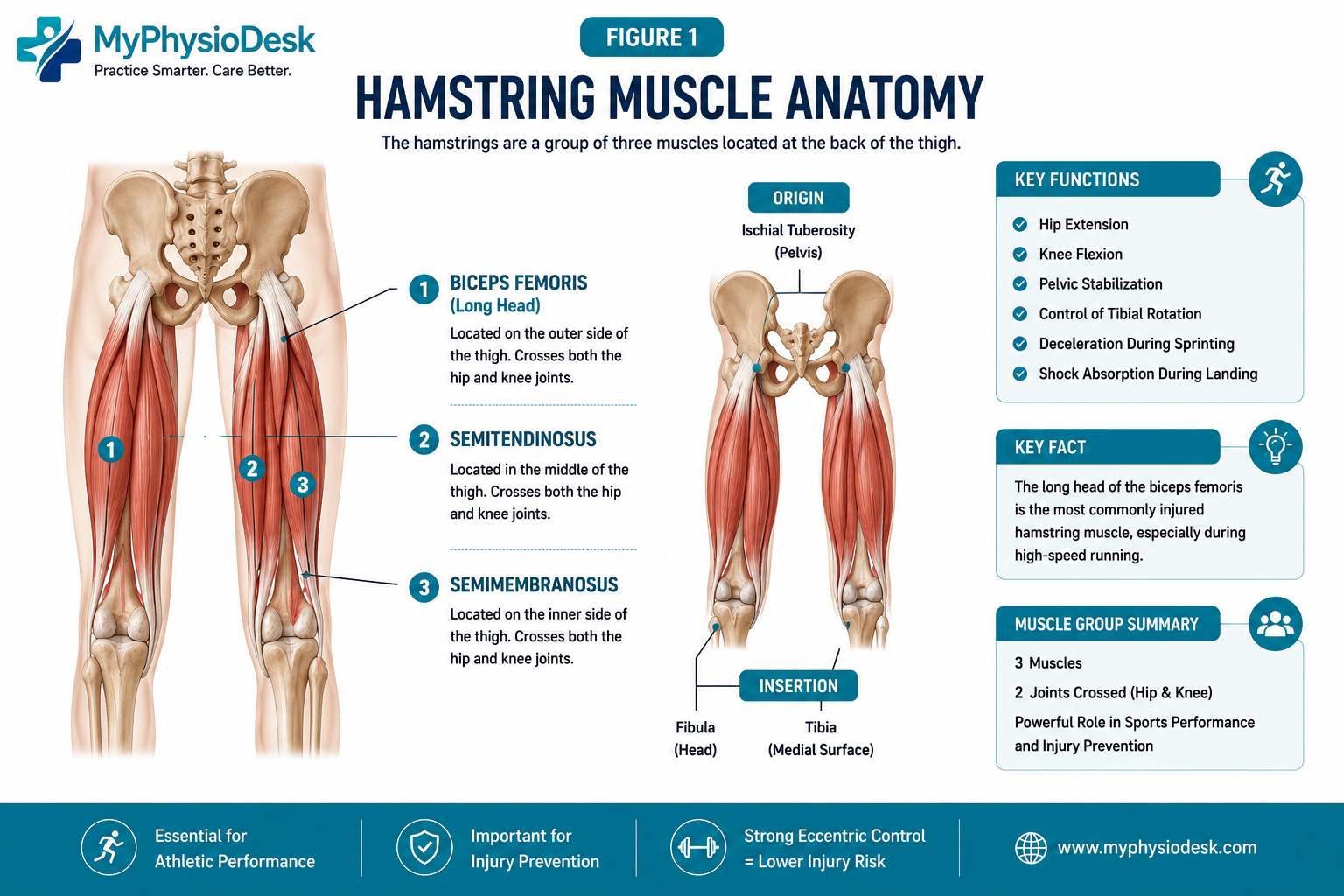
The hamstring group consists of three primary muscles located on the posterior aspect of the thigh:
- Biceps Femoris (Long Head and Short Head)
- Semitendinosus
- Semimembranosus
These muscles originate primarily from the ischial tuberosity of the pelvis and insert around the tibia and fibula. Together they span both the hip and knee joints, making them particularly vulnerable during explosive sporting movements.
Functions of the Hamstring Muscles
The hamstrings perform several important roles during everyday movement and athletic performance.
- Hip Extension
- Knee Flexion
- Pelvic Stabilization
- Control of Tibial Rotation
- Shock Absorption During Landing
- Deceleration During Sprinting
- Dynamic Knee Stability
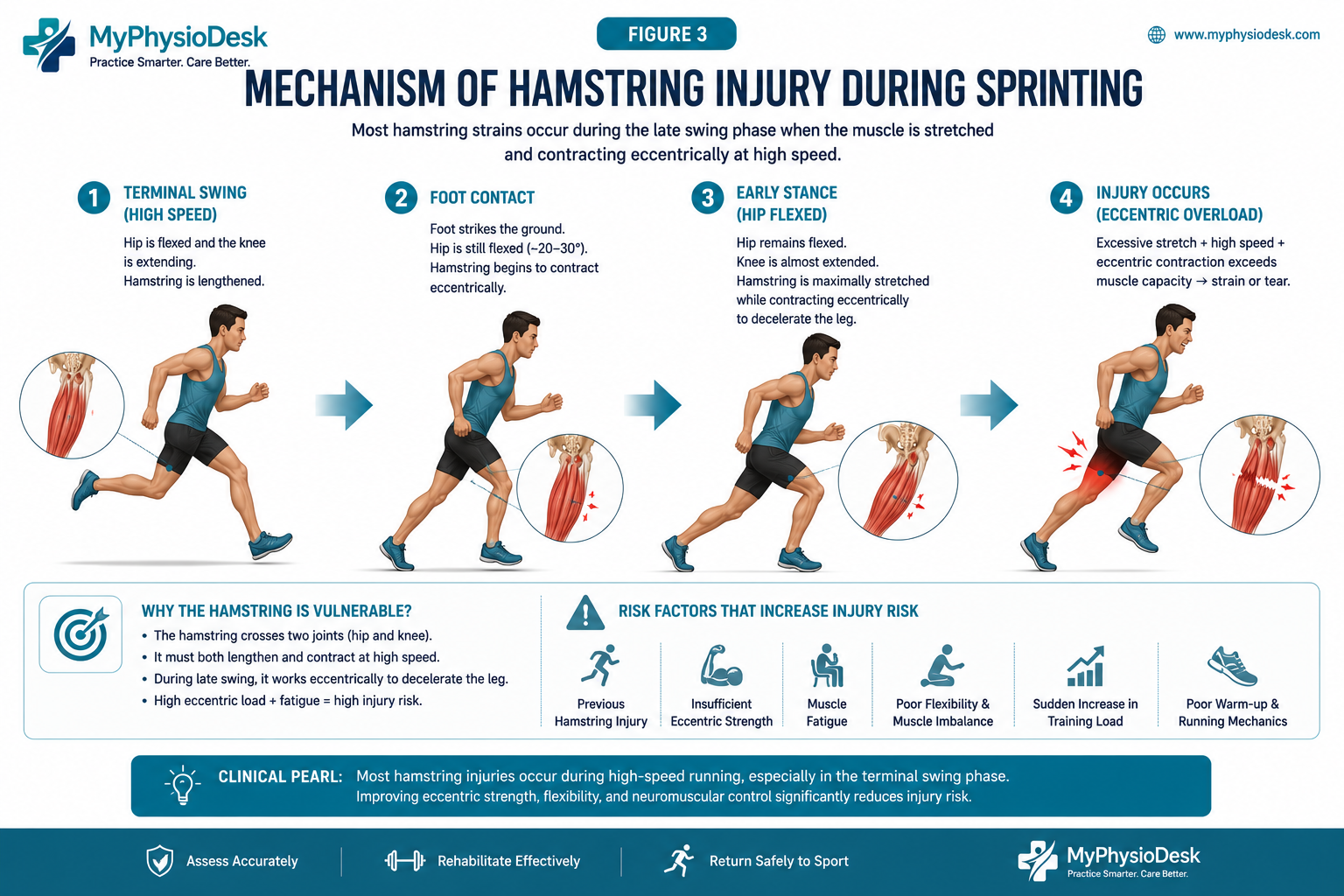
One of their most demanding functions occurs during the terminal swing phase of sprinting, where the hamstrings contract eccentrically to slow the forward movement of the lower leg before foot contact. This is also the phase in which most sprint-related hamstring injuries occur.
The long head of the biceps femoris is the most commonly injured hamstring muscle because it experiences high eccentric loads during high-speed running.
Types of Hamstring Injuries
Hamstring injuries vary considerably in severity. Proper grading helps determine prognosis and rehabilitation progression.
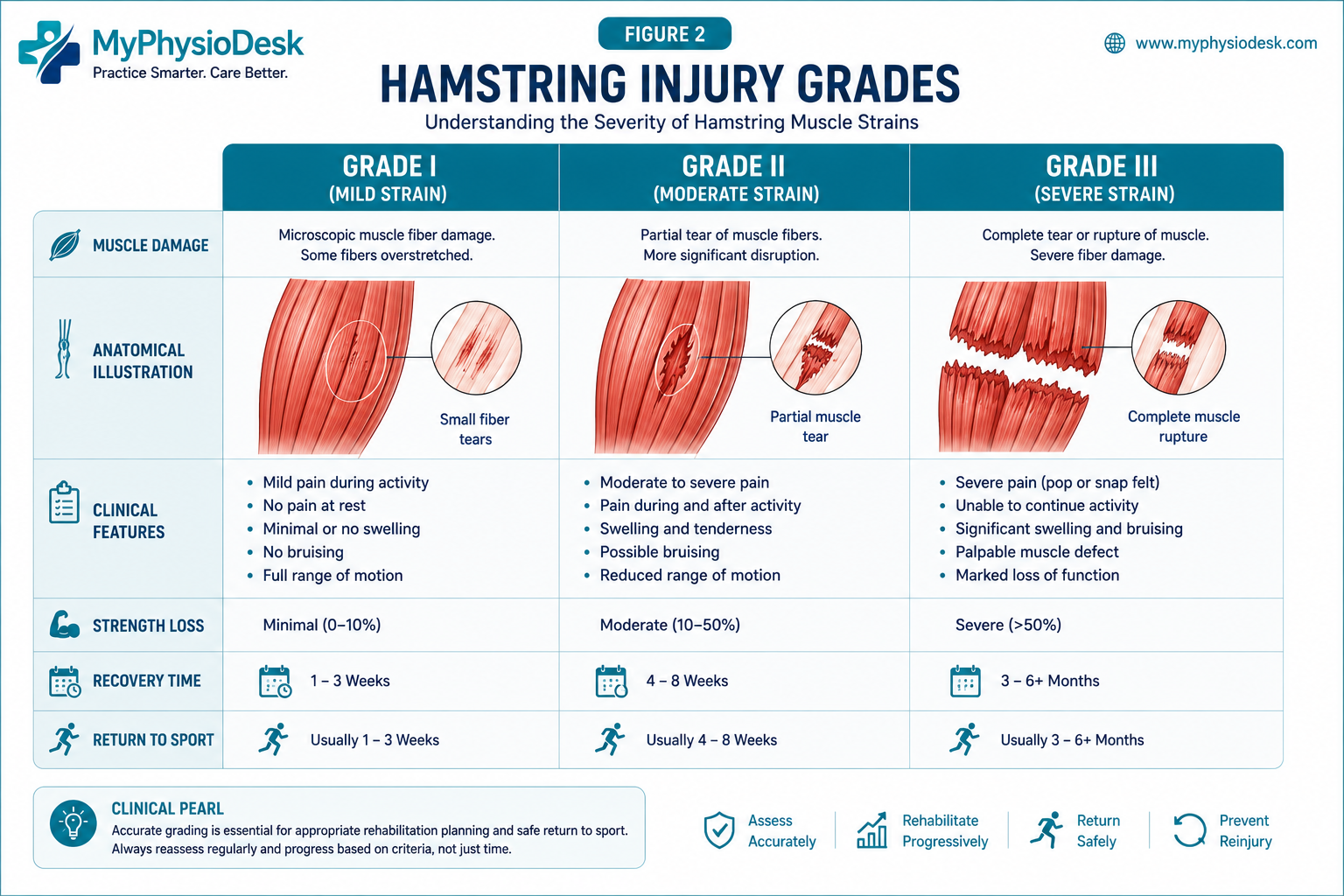
Grade I (Mild Strain)
- Microscopic muscle fibre damage
- Mild pain
- Minimal strength loss
- No significant functional limitation
- Usually returns within 1–3 weeks
Grade II (Partial Tear)
- Partial muscle fibre disruption
- Moderate pain
- Visible bruising
- Reduced strength
- Difficulty walking or running
- Recovery may require 4–8 weeks
Grade III (Complete Tear)
- Complete rupture of the muscle or tendon
- Severe pain initially
- Significant weakness
- Palpable muscle defect
- May require surgical repair
- Recovery often exceeds 3–6 months
Common Causes of Hamstring Injuries
Most hamstring injuries occur during activities requiring explosive lower-limb power.
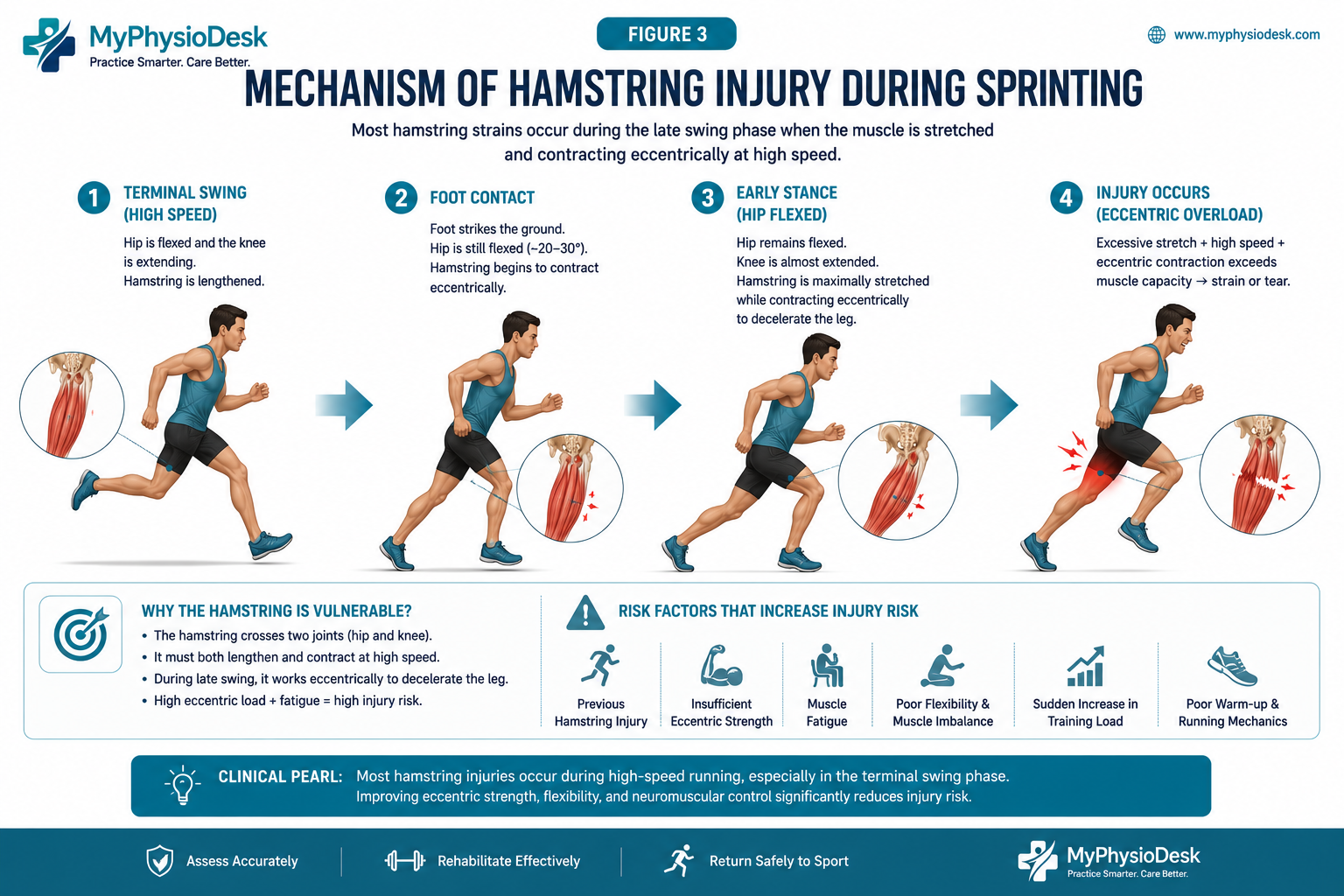
Common causes include:
- High-speed sprinting
- Sudden acceleration
- Rapid deceleration
- Kicking movements
- Overstretching during sliding tackles
- Poor warm-up
- Muscle fatigue
- Previous hamstring injury
- Inadequate rehabilitation
Risk Factors
Several intrinsic and extrinsic factors increase an athlete's likelihood of sustaining a hamstring injury.
Intrinsic Factors
- Previous hamstring injury
- Reduced eccentric strength
- Poor flexibility
- Muscle imbalance
- Weak gluteal muscles
- Poor core stability
- Limited hip mobility
Extrinsic Factors
- Sudden increase in training load
- Poor running technique
- Inadequate recovery
- Improper footwear
- Poor playing surface
- Insufficient warm-up
Many athletes focus only on stretching after a hamstring injury. However, reduced eccentric strength—not flexibility alone—is one of the major contributors to recurrent hamstring strains.
Clinical Presentation
Patients often describe a sudden sharp pain in the posterior thigh while sprinting or accelerating. Some athletes report hearing or feeling a "pop" at the time of injury.
Common signs and symptoms include:
- Sudden posterior thigh pain
- Difficulty walking
- Pain during running
- Pain during resisted knee flexion
- Localized tenderness
- Bruising (Grade II–III)
- Swelling
- Reduced stride length
- Loss of sprint speed
Subjective Assessment
A thorough history provides valuable information regarding injury severity and guides rehabilitation planning.
Ask about:
- Mechanism of injury
- Location of pain
- Previous hamstring injuries
- Sport played
- Training load
- Recent increase in activity
- Functional limitations
- Return-to-sport goals
Physical Examination
The examination should include:
- Observation
- Gait Analysis
- Palpation
- Active Range of Motion
- Passive Range of Motion
- Resisted Knee Flexion
- Hip Extension Strength
- Neurodynamic Assessment (if indicated)
MRI or diagnostic ultrasound may be recommended when the diagnosis is uncertain or a significant tear is suspected.
Differential Diagnosis
Posterior thigh pain is not always caused by a hamstring injury. Physiotherapists should also consider:
- Lumbar Radiculopathy
- Sciatic Nerve Irritation
- Adductor Muscle Injury
- Gluteal Muscle Strain
- Ischial Bursitis
- Proximal Hamstring Tendinopathy
- Referred Pain from the Lumbar Spine
Principles of Hamstring Rehabilitation
Modern rehabilitation is criterion-based rather than purely time-based. Progression should depend on symptom response, objective strength, movement quality, and functional performance rather than simply waiting a predetermined number of weeks.
Key principles include:
- Protect healing tissues.
- Reduce pain and inflammation.
- Restore normal gait.
- Regain pain-free range of motion.
- Restore eccentric hamstring strength.
- Improve lumbopelvic stability.
- Correct running mechanics.
- Prepare for sport-specific demands.
Phase 1 – Acute Rehabilitation (0–7 Days)
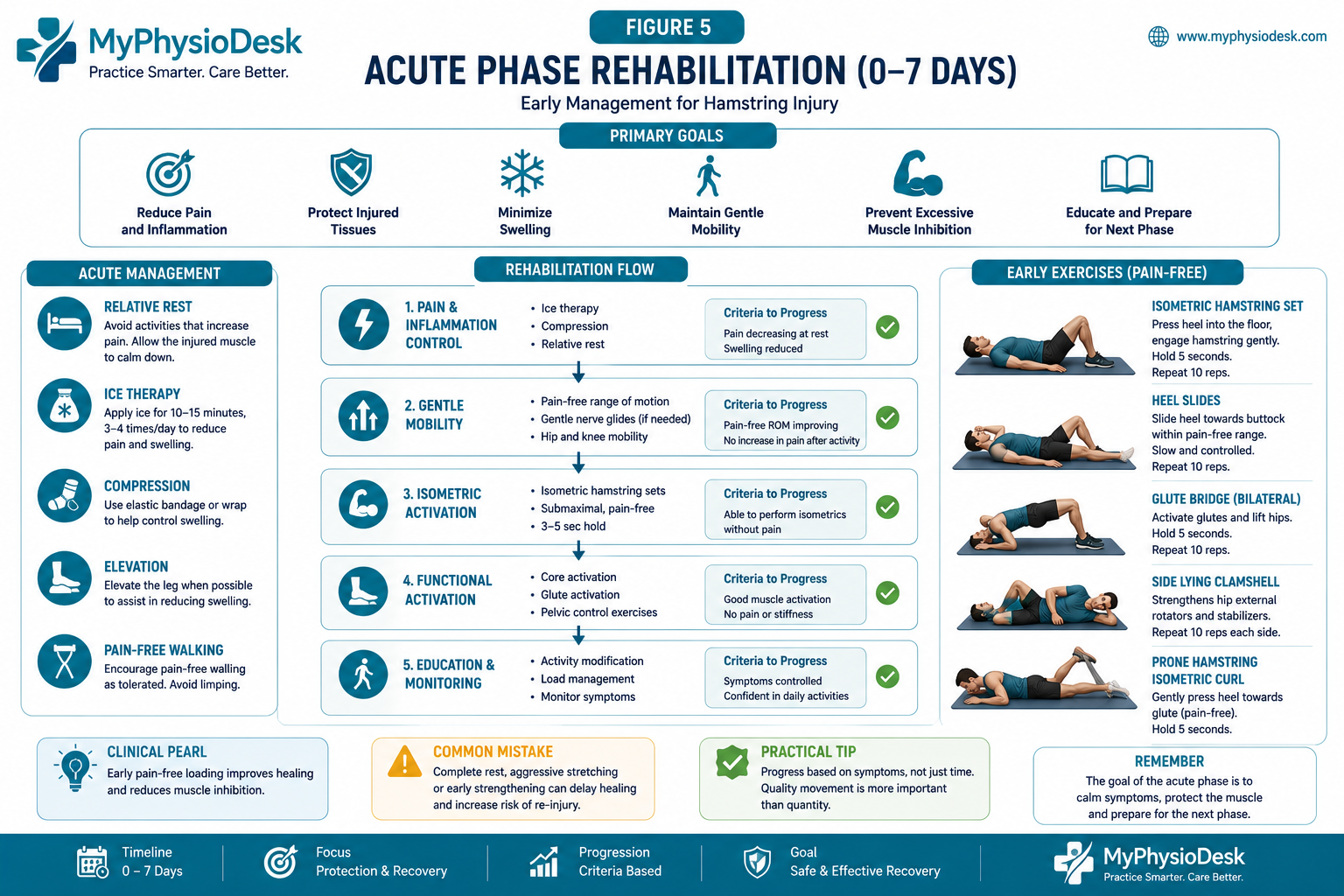
Primary Goals
- Reduce pain.
- Minimize swelling.
- Protect injured tissues.
- Maintain gentle mobility.
- Prevent excessive muscle inhibition.
- Educate the athlete.
Early Management
- Relative Rest
- Compression
- Graduated Loading
- Pain-Free Walking
- Gentle Isometric Exercises
- Patient Education
Complete rest is rarely beneficial. Early pain-free loading, guided by symptom response, helps stimulate tissue healing and reduces excessive muscle deconditioning.
Phase 2 – Early Rehabilitation Phase (Week 1–3)
Once pain begins to decrease and the athlete can walk comfortably without significant limping, rehabilitation progresses toward restoring muscle function. During this stage, the focus shifts from protecting the injured tissue to gradually reintroducing controlled loading while maintaining proper movement quality.
The rehabilitation program should remain symptom-guided. Mild discomfort during exercise may be acceptable, but sharp pain or worsening symptoms indicate that the progression is too aggressive.
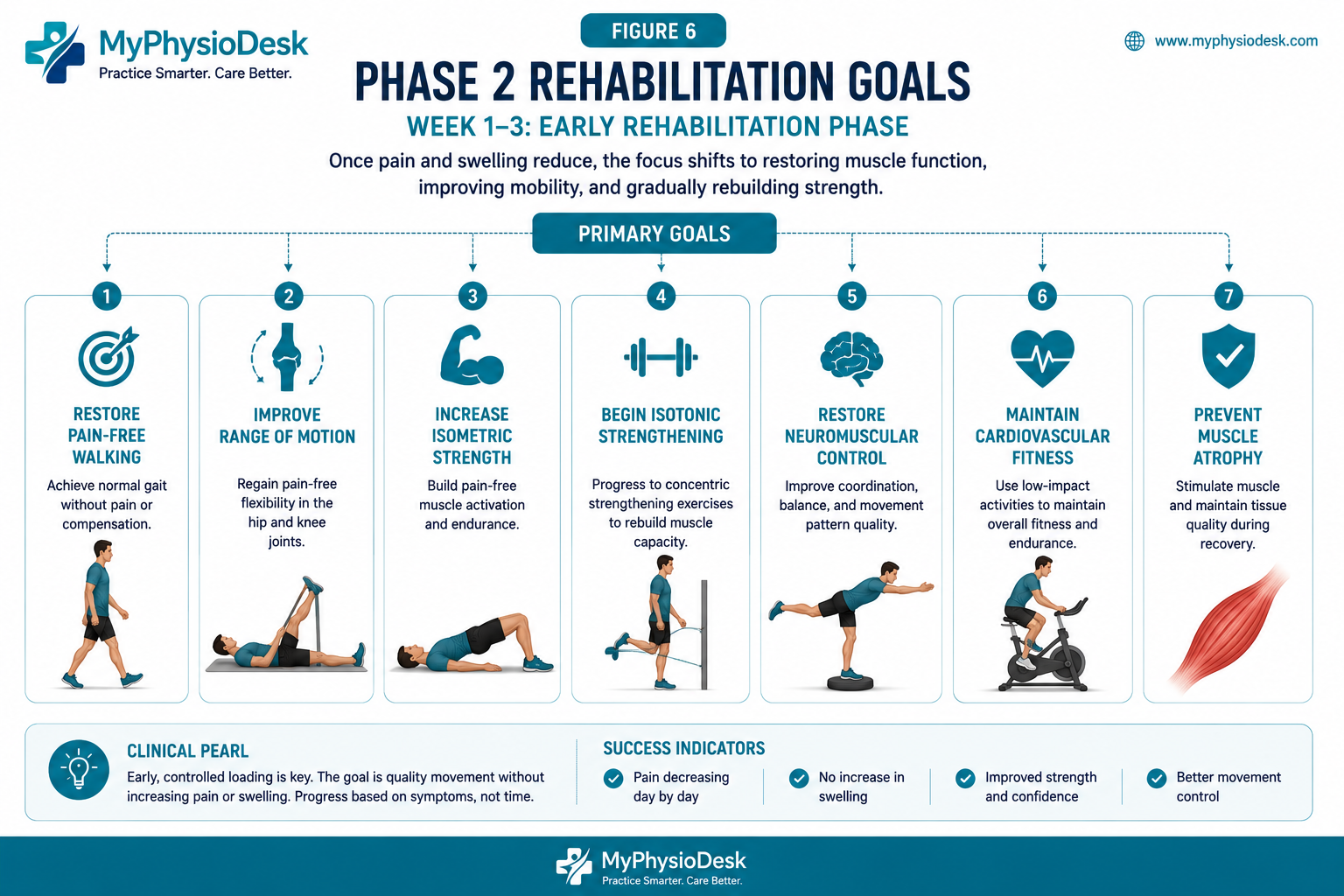
Primary Goals
- Restore pain-free walking.
- Improve range of motion.
- Increase isometric strength.
- Begin isotonic strengthening.
- Restore neuromuscular control.
- Maintain cardiovascular fitness.
- Prevent muscle atrophy.
Pain should gradually decrease throughout rehabilitation. Exercises should challenge the athlete without causing increased pain the following day.
Exercise Progression
Exercise progression should follow a logical sequence that gradually increases muscle loading while respecting tissue healing.
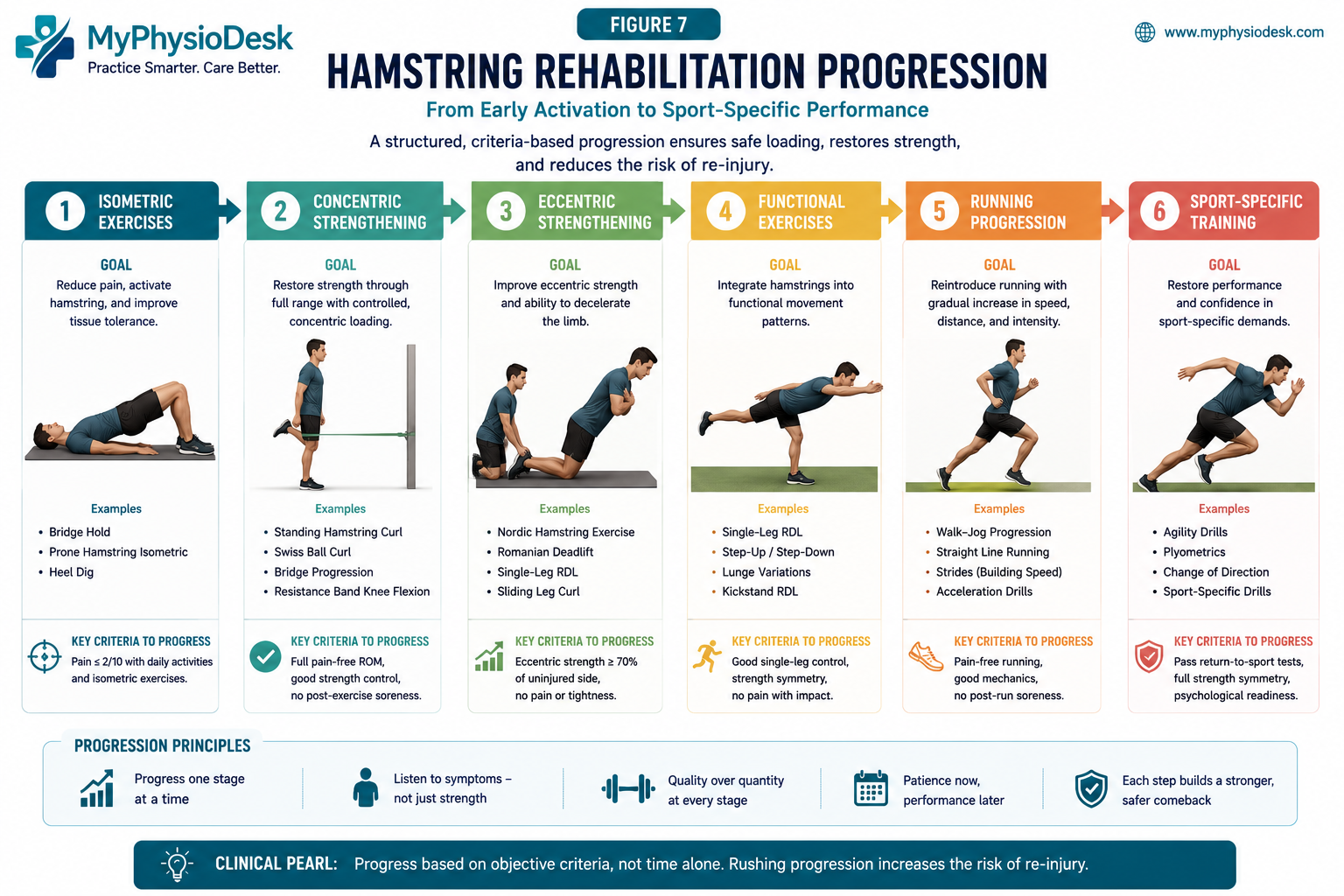
The recommended progression is:
- Isometric Exercises
- Concentric Strengthening
- Eccentric Strengthening
- Functional Exercises
- Running Progression
- Sport-Specific Training
Isometric Strengthening
Isometric exercises allow muscle activation with minimal muscle length change. These exercises help reduce pain, improve muscle recruitment, and prepare the athlete for more demanding strengthening exercises.
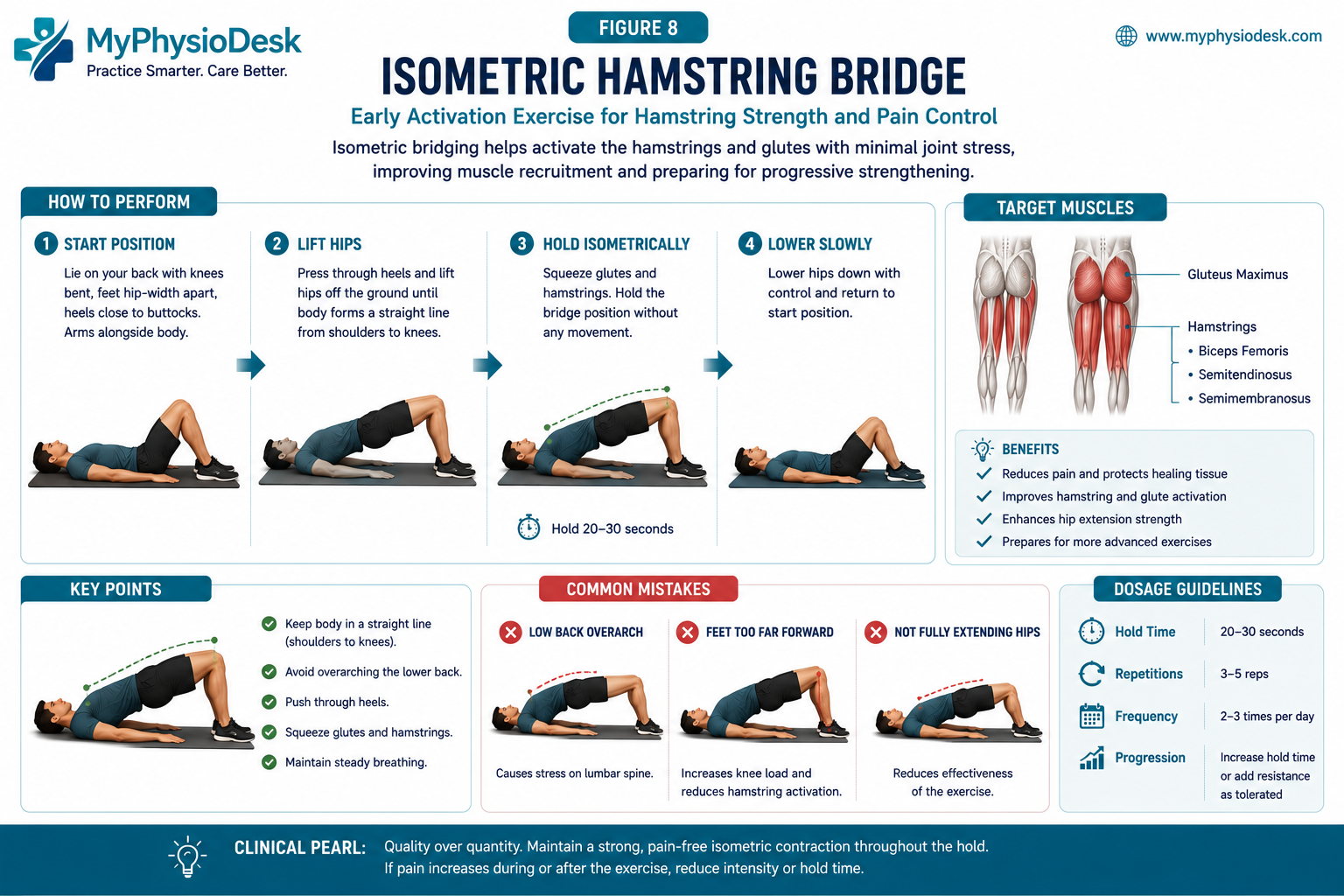
Recommended exercises include:
- Bridge Hold
- Heel Dig Bridge
- Prone Hamstring Isometric
- Swiss Ball Hold
Concentric Strengthening
Once pain-free isometric contractions are achieved, concentric strengthening exercises are introduced to restore muscle strength throughout the available range of motion.
Examples include:
- Standing Hamstring Curl
- Bridge Progression
- Swiss Ball Curl
- Resistance Band Knee Flexion
- Step-Up Exercises
Eccentric Strengthening
Eccentric strengthening is considered one of the most important components of hamstring rehabilitation. Most hamstring injuries occur during eccentric contraction at high running speeds, making eccentric training essential for reducing reinjury risk.
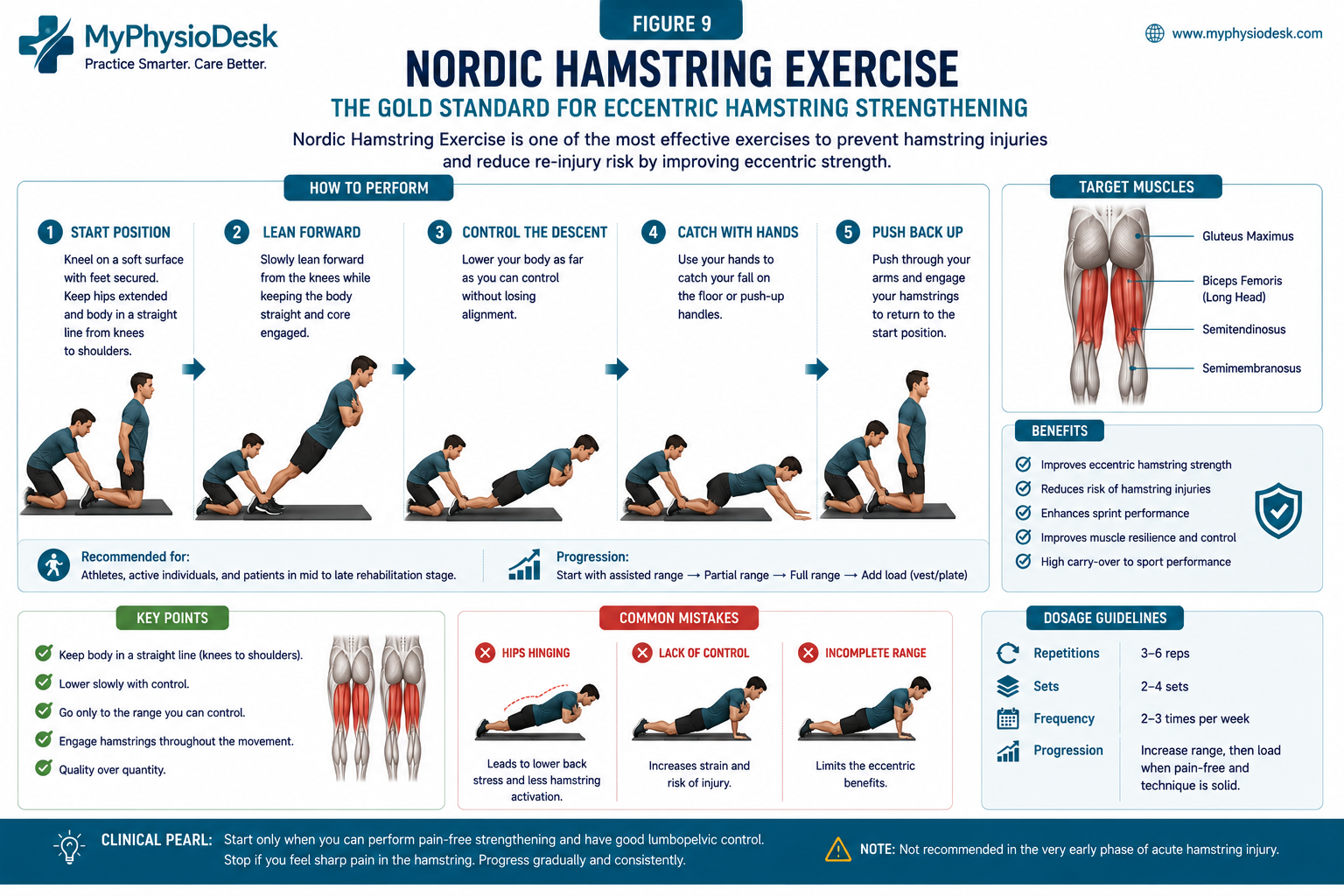
Examples include:
- Nordic Hamstring Exercise
- Romanian Deadlift
- Single-Leg Romanian Deadlift
- Sliding Leg Curl
- Swiss Ball Eccentric Curl
Do not introduce Nordic Hamstring exercises during the very early stages if significant pain persists. Begin with low-load eccentric exercises before progressing to higher-intensity movements.
Balance and Neuromuscular Training
Following injury, proprioception and neuromuscular control often decline. Balance training helps restore joint awareness and improves movement efficiency.
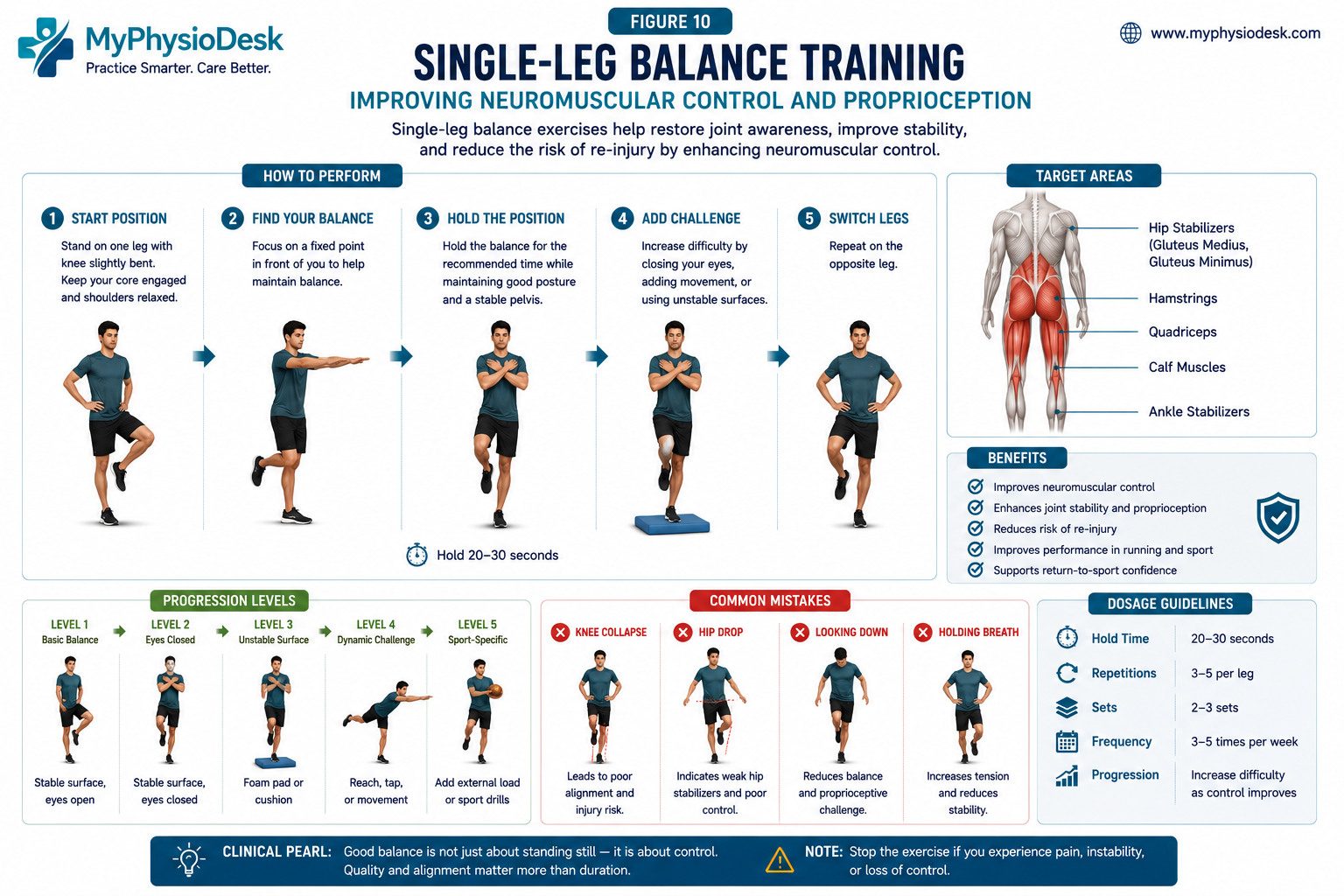
Exercises include:
- Single-Leg Standing
- Foam Balance
- Balance Board Training
- Star Excursion Reach
- Perturbation Exercises
Core Stability Training
Poor lumbopelvic control increases hamstring loading during sprinting. Core strengthening improves force transmission and movement efficiency throughout the lower kinetic chain.
Recommended exercises:
- Front Plank
- Side Plank
- Bird Dog
- Dead Bug
- Pallof Press
Mobility Restoration
Flexibility should improve gradually through controlled movement rather than aggressive stretching. Excessive stretching during early healing may delay tissue recovery.
Mobility techniques include:
- Active Knee Extension
- Dynamic Hamstring Mobility
- Hip Flexor Stretch
- Glute Mobility Exercises
Many athletes attempt aggressive static stretching immediately after injury. This often increases pain and delays tissue healing. Restore mobility gradually using active movement before progressing to longer-duration stretches.
Criteria to Progress to Phase 3
The athlete should demonstrate the following before beginning running and advanced strengthening:
- Pain-free walking.
- Near full range of motion.
- Minimal tenderness.
- Good bridge performance.
- Pain-free resisted knee flexion.
- Good single-leg balance.
- No increase in symptoms after exercise.
Phase 3 – Advanced Rehabilitation and Return-to-Sport Phase (Week 4–12+)
The final rehabilitation phase prepares athletes for unrestricted sports participation. At this stage, the injured hamstring should tolerate high-speed movements, rapid acceleration, deceleration, jumping, and sport-specific demands without pain or compensation.
Rather than relying solely on time since injury, physiotherapists should base progression on objective strength testing, movement quality, and functional performance.
Primary Goals
- Restore full muscle strength.
- Improve eccentric control.
- Develop explosive power.
- Improve sprint mechanics.
- Restore agility.
- Increase athlete confidence.
- Prepare for unrestricted competition.
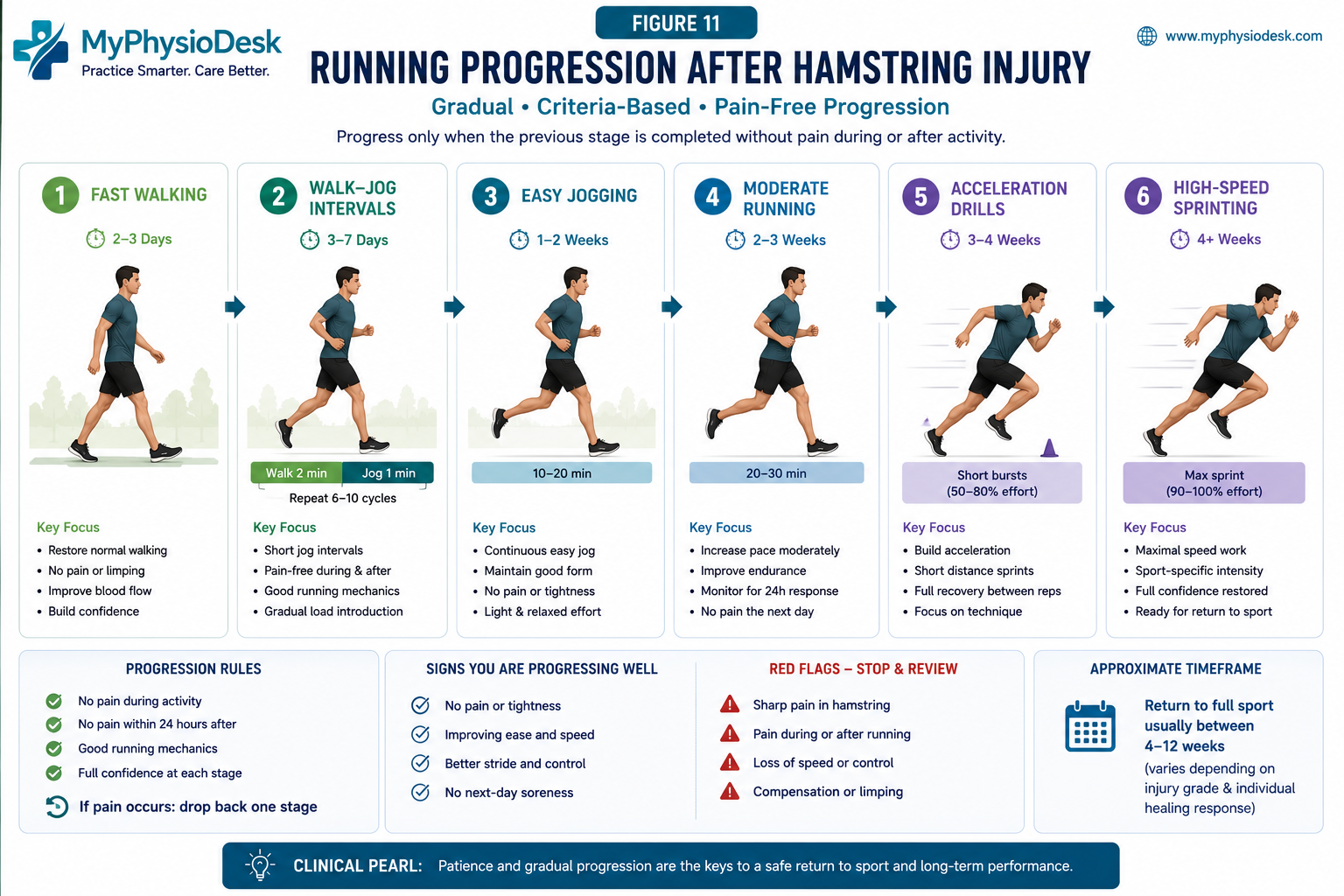
Running Progression
Running should only begin when the athlete demonstrates pain-free walking, good eccentric hamstring strength, and normal movement mechanics.
A typical progression includes:
- Fast Walking
- Walk–Jog Intervals
- Easy Jogging
- Moderate Running
- Acceleration Drills
- High-Speed Sprinting
Never progress directly from jogging to maximal sprinting. Gradually increase speed while monitoring pain, confidence, and running mechanics.
Plyometric Training
Plyometric exercises develop explosive power and prepare the athlete for jumping, landing, and rapid force production.
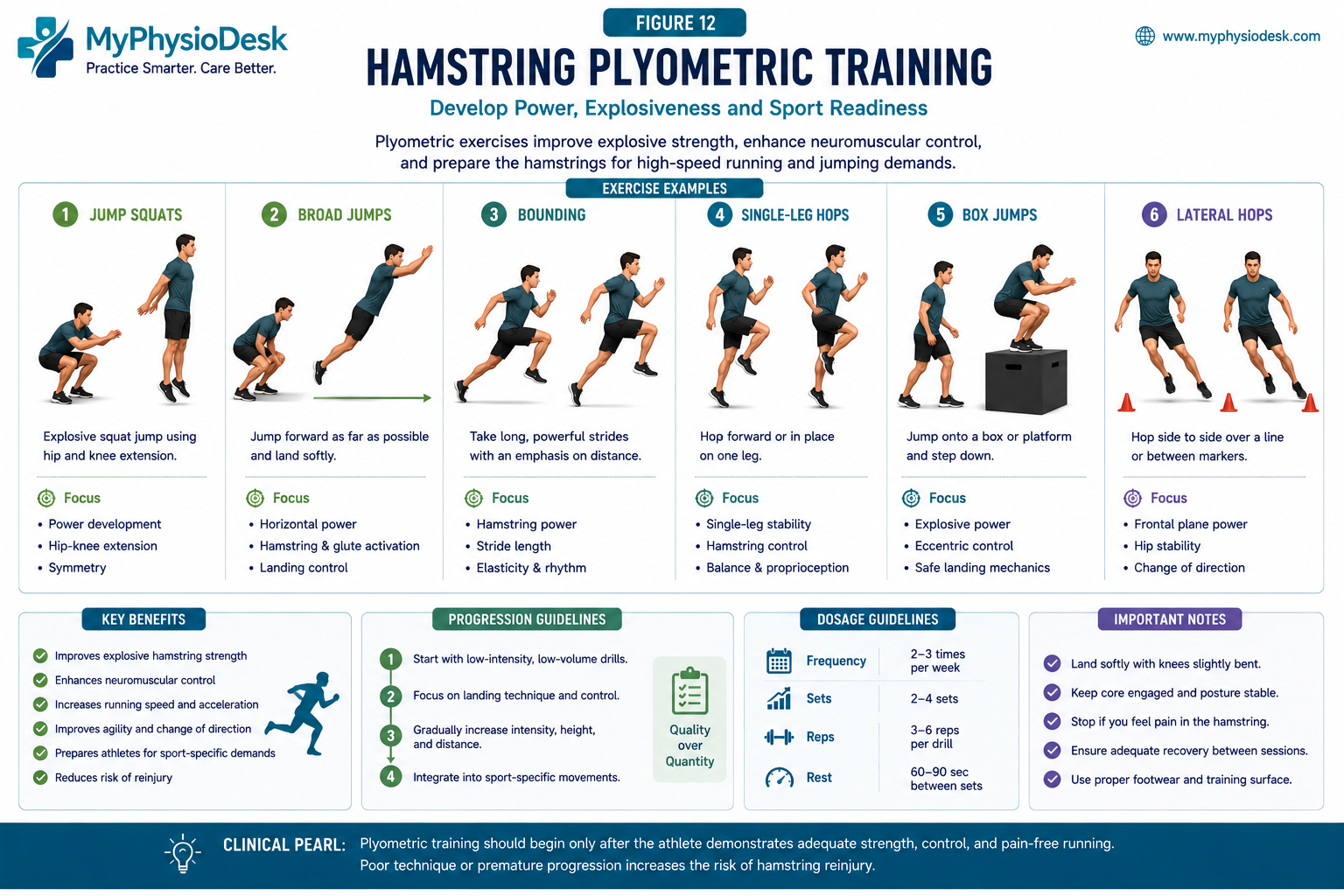
Examples include:
- Jump Squats
- Broad Jumps
- Bounding
- Single-Leg Hops
- Box Jumps
- Lateral Hops
Agility Training
Sports rarely involve straight-line running. Athletes must also tolerate rapid changes of direction while maintaining excellent lower limb control.
Recommended drills include:
- Shuttle Runs
- Zig-Zag Running
- Figure-of-Eight Running
- Ladder Drills
- Cone Drills
- Reaction Drills
Sport-Specific Rehabilitation
Rehabilitation should eventually resemble the demands of the athlete's sport.
Examples include:
- Football Sprint and Cutting
- Cricket Fielding Drills
- Badminton Lunges
- Basketball Jump Landings
- Tennis Direction Changes
- Hockey Sprint Intervals
Functional Performance Testing
Objective testing helps determine whether an athlete is ready to return safely to training and competition.
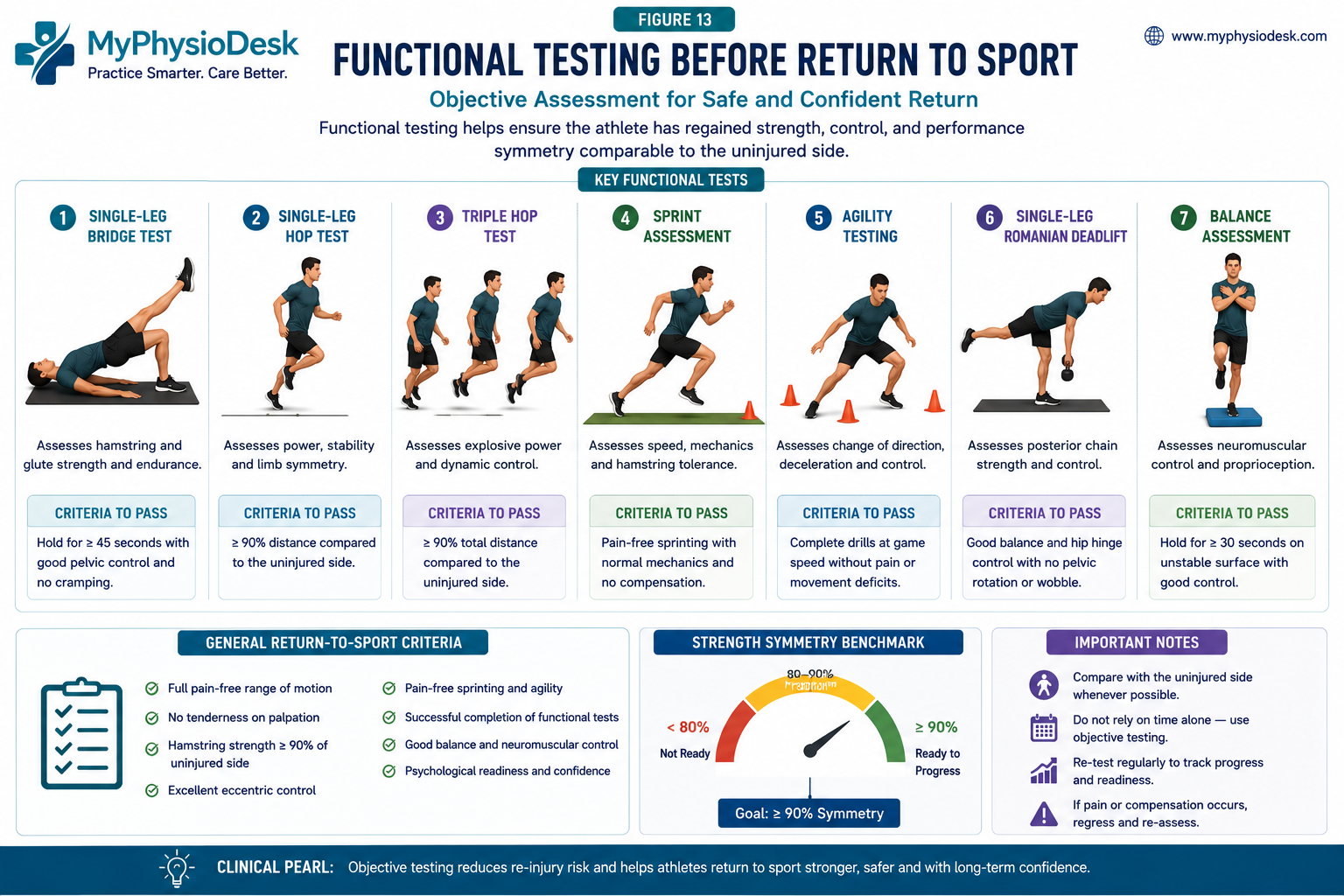
Assessment should include:
- Single-Leg Bridge Test
- Single-Leg Hop Test
- Triple Hop Test
- Sprint Assessment
- Agility Testing
- Single-Leg Romanian Deadlift Control
- Balance Assessment
Criteria for Return to Sport
Before returning to unrestricted sport, athletes should demonstrate:
- Full pain-free range of motion.
- No tenderness on palpation.
- Symmetrical hamstring strength.
- Excellent eccentric control.
- Pain-free sprinting.
- Successful completion of agility drills.
- Good balance and neuromuscular control.
- Psychological confidence.
Preventing Hamstring Reinjury
Hamstring strains have one of the highest recurrence rates in sport. Long-term prevention should continue even after the athlete returns to competition.
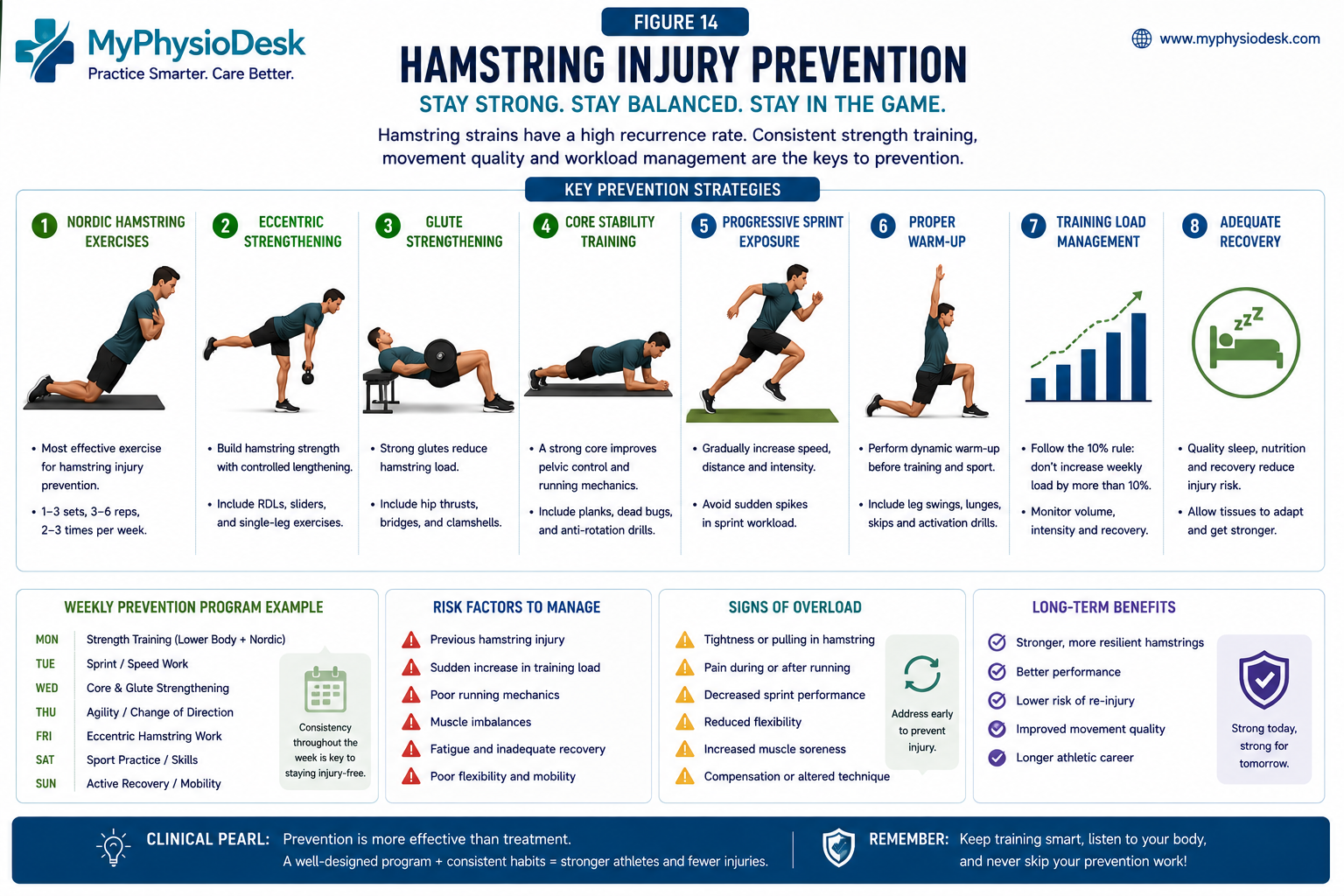
Key prevention strategies include:
- Regular Nordic Hamstring Exercises.
- Eccentric strengthening.
- Glute strengthening.
- Core stability training.
- Progressive sprint exposure.
- Proper warm-up.
- Training load monitoring.
- Adequate recovery.
Many athletes discontinue strengthening exercises once pain disappears. Continuing eccentric hamstring training throughout the season significantly reduces reinjury risk.
Complete Rehabilitation Checklist
- ✅ Pain Assessment
- ✅ Walking Assessment
- ✅ Range of Motion
- ✅ Hamstring Strength
- ✅ Glute Strength
- ✅ Core Stability
- ✅ Balance Training
- ✅ Running Progression
- ✅ Plyometric Training
- ✅ Agility Drills
- ✅ Functional Testing
- ✅ Return-to-Sport Assessment
- ✅ Injury Prevention Program
Practical Clinical Tips
- Compare strength with the uninjured side before progressing exercises.
- Prioritize movement quality over exercise intensity.
- Monitor athlete confidence throughout rehabilitation.
- Educate athletes about the importance of long-term strengthening.
- Reassess progress regularly instead of relying only on timelines.
Evidence-Informed Clinical Practice
Modern rehabilitation emphasizes progressive loading, eccentric strengthening, neuromuscular control, and objective functional testing rather than prolonged rest. Athletes who complete criterion-based rehabilitation programs generally demonstrate lower reinjury rates and better long-term performance.
Final Thoughts
Successful hamstring rehabilitation is a progressive process that extends beyond pain relief. Physiotherapists should combine structured exercise progression, objective assessment, athlete education, and sport-specific training to restore performance safely and minimize reinjury risk.
With proper clinical reasoning and regular reassessment, athletes can confidently return to competition while reducing the likelihood of future hamstring injuries.
Manage Athlete Rehabilitation More Efficiently with MyPhysioDesk
Tracking rehabilitation progress manually can be challenging, especially when managing multiple athletes. MyPhysioDesk helps physiotherapists streamline every stage of rehabilitation with digital tools designed for modern clinical practice.
- ✔ Digital Assessment Forms
- ✔ Structured SOAP Notes
- ✔ Personalized Exercise Plans
- ✔ Progress Tracking
- ✔ Clinical Attachments
- ✔ Patient Timeline
- ✔ Appointment Management
- ✔ Cloud-Based Patient Records
Whether you're treating recreational athletes or elite sports professionals, MyPhysioDesk enables you to document assessments, prescribe rehabilitation programs, monitor recovery, and maintain organized clinical records—all from one secure platform.
Start your 14-Day FREE Trial today.
🌐 https://myphysiodesk.com
Back to blog